Tag #93: “The Stuck At Home Book Tag”

Image Credit: Ebook Friendly

I saw this amazing tag on Howling Libraries from Destiny!

I wasn’t tagged for this, but this is the link to Destiny’s post: The Stuck At Home Book Tag

Ellyn at Allonsythornraxx created this tag!


tag_therules
  • Thank the person who nominated you
  • Answer all the questions down below
  • Pingback to the creator: Ellyn @ Allonsythornraxx
  • Nominate 5+ bloggers you’d like to know more about, to do this tag

1) What are you currently reading?

I’m currently reading Brainiac: Adventures in the Curious, Competitive, Compulsive World of Trivia Buffs by Ken Jennings, Big Magic by Elizabeth Gilbert, and Daily Guideposts 2020.

2) What’s your favourite ‘can’t-leave-the-house’ activity?

Writing, either on my laptop or in a journal. I’m working on the second draft of my first novel. I also have four other novels in progress.

3) A book you’ve been meaning to read for forever

You Will Know Me by Megan Abbott.

4) An intimidating book on your TBR

The Less People Know About Us: A Mystery of Betrayal, Family Secrets, and Stolen Identity by Axton Betz-Hamilton. I know the backstory behind this book, Betz-Hamilton’s memoir, from the Criminal podcast. (Make sure you listen to Episode 51 first, then Episode 125). I want it to be as amazing as I think it is, based on the podcast episodes that were so masterfully produced.

5) Top 3 priority books on your TBR.

The Less People Know About Us: A Mystery of Betrayal, Family Secrets, and Stolen Identity, Harry Potter and the Goblet of Fire (Re-Read), and Educated.

6) Recommend a short book

Of Mice and Men by John Steinbeck (103 pages).

7) Recommend a long book

Harry Potter and the Deathly Hallows (759 pages).

8) Something you’d love to do while stuck at home

Start pastel painting again.

9) What do you plan on reading next?

The Less People Know About Us: A Mystery of Betrayal, Family Secrets, and Stolen Identity


I’m not going to tag anyone, but if you want to do this, please do! I love reading people’s answers.


Until the next headline, Laura Beth 🙂

Commentary #104: “Ten Books I Wish I Had Read As A Teen” (Top Ten Tuesday)

I saw several posts recently about ten books I wish I had read as a teen!

Books, Libraries, Also Cats – Top Ten Tuesday Books I Wish I’d Had As A Teen

The Bookish Hooker – Ten Books I Wish I Had Read As A Child

bookloversblog – Top Ten Tuesday #261

that artsy reader girl – 22 YA Contemporary Romances Teen Me Would Have Loved


Here’s my list!

Note, there are several here that were published after I left my teenage years. I turned 20 in 2008.


  1. The Hobbit, J.R.R. Tolkien (1937)
  2. The Perks of Being A Wallflower, Stephen Chbosky (1999)
  3. Crank, Ellen Hopkins (2004)
  4. Looking for Alaska, John Green (2005)
  5. The Absolutely True Diary of a Part-Time Indian, Sherman Alexie (2007)
  6. Thirteen Reasons Why, Jay Asher (2007)
  7. The Hunger Games, Suzanne Collins (2008)
  8. Wintergirls, Laurie Halse Anderson (2009)
  9. Eleanor & Park, Rainbow Rowell (2012)
  10. Dumplin’, Julie Murphy (2015)

Out of these ten, I’ve read The Perks of Being A Wallflower, Looking for Alaska, Thirteen Reasons Why, The Hunger Games, and Wintergirls. I read most of these when I was in college.

As for the others, I’ve only read parts of them, or heard of them through various media sources or other bloggers. However, I plan to add these five to future TBRs.


What about you? Have you read any of these books?

What books do you wish you’d read as a teen?


Until the next headline, Laura Beth 🙂

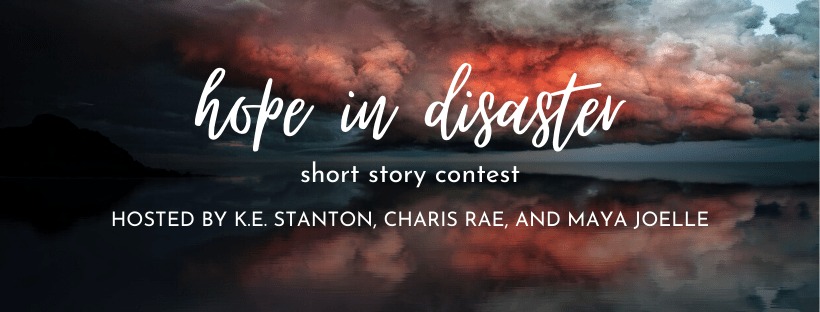
Getting Personal #207: Hope in Disaster Writing Contest

Image Credit: Charis Rae

I adore Charis Rae!

Here’s the link to her post, and how to enter the contest: Enter the Hope in Disaster Writing Contest.

Submissions are open now, through May 23.

Please note the age range. Charis Rae’s contest is open to ages 13-25.


If you’re outside that age range, like me, you can enter Bella Putt’s contest. Check out her post and guidelines here: I’m Co-Hosting A Short Story Contest. The submission deadline is the same – May 23.


Good luck to all who enter!


Until the next headline, Laura Beth 🙂

Commentary #98: “Backstory: Relevant Information or an Inconsequential Event?”

Found on A Writer’s Path

I’ve been following A Writer’s Path for a while now. There are many guest posts, and I learn something from every one I read.

Here’s the link to the Backstory post:

Backstory: Relevant Information or an Inconsequential Event?

As I ease into the first round of editing of the first draft of my first novel, this post struck a chord with me. I’m grateful for my friends who have already provided feedback on the first draft, and I’m eagerly awaiting a few more to chime in with their thoughts. Thank you, Melissa, Amanda, Janaye, Hannah, and Mike.

It’s also gotten me think about my characters’ backstories in my three other novels.

What is important?

What may not be important?

Did I leave anything out?

I really liked the example the author gave with a character’s fear of spiders. On the surface, it could be a minor detail. But, that fear can also be developed into something significant, involving the main story and potential conflict. It changes from something minor to something major.

And, as I prepare to start my fifth novel during NaNoWriMo next month, I’m keeping this post in my back pocket.

What do you think? Let me know in the comments!

Until the next headline, Laura Beth 🙂

Blog Awards #27: The Inspiration Award

The Inspiration Award

Image Credit: Life Lessons Around The Dinner Table

Thank you so much, Kristian, for nominating me for The Inspiration Award!

Here’s the link to where I was nominated / recognized:


Here are several blogs I find inspiring, in no particular order. Please, go give them some love!

Also, if I recognized you here, please don’t feel obligated to participate if you don’t want to. This award is designed to share other bloggers and recognize them!

BeautyBeyondBones

  • She used to be anonymous, but not anymore! Caralyn speaks her heart. She shares fabulous, mouth-watering recipes. In addition, she offers a powerful, thought-provoking Christian perspective on nearly everything she writes about.

J.N. Cahill

  • We became friends on Facebook earlier this year, after I joined a group called The Book Drunkard. She’s a talented writer, loves reading, and her blog is really cool.

Didi Oviatt

  • Didi is my kind of woman! She’s smart as a whip, funny as hell, and an amazing mother! She posts the best WIP writing prompt challenges every month. Can’t wait to do the August one soon!

The Tony Burgess Blog

  • Tony’s a great guy, and an even better writer. His daily entries give me insight in his world in Tennessee, his thoughts about his family, faith, and more.

Charis Rae

  • Charis is such a sweetheart! She’s great at interviewing authors, reads a ton, and writes beautifully.

Destiny at Howling Libraries

  • Destiny is one cool chick! I love her book reviews so much.

Sara at The Bibliophagist

  • Sara is another one of my favorite book reviewers! She’s so sweet, too, taking the time to respond to every comment!

Which bloggers inspire you?


Until the next headline, Laura Beth 🙂

Commentary #92: “Are we policing books too hard or not enough? Are we helping books get banned? Controversial Book Discussion Post. (Massive warning for triggers and hot topics throughout the whole blog post.) Do not read if you don’t feel comfortable with heavy topics/triggers.”

Controversial Books Quote

Image Credit: Pinterest

I really appreciated her perspective. I don’t agree with everything she said/wrote, but I felt it was such a good read that I had to share it.

Are we policing books too hard or not enough? Are we helping books get banned? Controversial Book Discussion Post. (Massive warning for triggers and hot topics throughout the whole blog post.) Do not read if you don’t feel comfortable with heavy topics/triggers.


Until the next headline, Laura Beth 🙂

Getting Personal #171: “My Grandma, the PUBLISHED AUTHOR!!!” (Reblogged)

Full disclosure: This is not about my grandma!

I wanted to spread this exciting news!

I’ve been following Didi and her blog for quite a while. I remember her telling us about her amazing grandmother, who was in the process of writing a novel. Well, this week, her grandma’s dream became a reality! Check out Didi’s post, Doris’s book, and share away! I’m definitely buying it in the near future.

Congratulations, Doris!


Until the next headline, Laura Beth 🙂

Commentary #84: “As GM’s Lordstown plant idles, an iconic American job nears extinction”

Lordstown GM Plant

Image Credit: CNN

I saw this fascinating CNN article on Wednesday, March 6th:


The Lordstown, Ohio plant has been closed for nearly a week now. It made its last Chevy Cruze sedan on March 6th. Another sign of the times. General Motors (GM) has shrunk from more than 618,000 workers to just north of 100,000 people.

Auto manufacturing in the U.S. has been declining for a while now. The closure of Lordstown is part of GM’s shift in strategy – Away from sedans, more focus on higher-margin trucks and light SUVs, as well as researching and developing electric and autonomous vehicles. GM has also invested in a ridesharing platform called Maven.

In addition to a declining workforce, U.S. auto workers have experienced a drop in wages (Roughly 18 percent since 1990, adjusted for inflation), and less retirement benefits. Just two years ago, only eight percent of factories offered pensions.


Lordstown sits in the Youngstown, Ohio region, halfway between Cleveland and Pittsburgh. The average worker in Youngstown made $38,000 per year in 2017. Compare that to $61,000 to $88,000 per year for full-time GM production workers, according to their United Auto Workers union contract. And that doesn’t include overtime pay and bonuses.

The Lordstown plant started to see changes about two years ago. As the demand for the Cruze sedan declined, the second and third shifts were cut, and 3,000 people were laid off. Of the remaining 1,400 people, about 400 accepted transfers to other plants, and they are able to hold on to their healthcare and pensions. There were 350 workers eligible for retirement. Those transferred workers will receive $30,000 in relocation assistance.

One of the workers interviewed for the article, at GM since 1995, thought she had enough seniority to transfer to another facility, such as the metal fabrication plant in Cleveland or the transmission factory in Toledo. However, relocating is not ideal, either. She’s stuck, quoted as saying GM has her in a “chokehold.”

“I make $32 an hour. I’m not going to go get a $12-an-hour job. I couldn’t survive on that at all. I’m going to get up and go, ride it out, try to get the best gig I can get, and be done with them.” She’s hoping to net her 30 years at GM – which won’t happen until 2025.


The Youngstown region has watched manufacturing slide downhill since the 1970s. The auto industry started to crack less than a decade later, with stiffer competition from Japanese automakers. In 1994, the North American Free Trade Agreement (NAFTA) dealt another blow, as work was outsourced to lower-paying suppliers. In 2007, as the automakers were having systemic issues related to the financial crisis and impending Great Recession, a lower-wage tier was created for entry-level workers, where they made 45 percent less per hour and got a 401(k) rather than a guaranteed pension. GM’s bankruptcy two years later tightened things even further.

For Lordstown, the community has thrived on GM. At one point, GM helped bring more than $2 million in tax revenue, among other benefits to schools and community ventures. Twenty years ago, Lordstown was competing with other cities to win another car model to replace the Chevy Cavalier. The community banded together, and along with plant officials, were successful in winning that car model. The community tried it again in 2018 – Posting signs, writing letters, and working with politicians. Unfortunately, one of the big factors was plant management wasn’t interested in participating this time.

Many are uncertain and fearful. They’ve watched GM shutter, and then re-open, their plant in Spring Hill, Tennessee. What if that happens in Lordstown?

Another problem is many GM workers were hired without secondary education. Nearly two-thirds of the 13,000 purported job openings in Youngstown, including information technology and healthcare, will require a post-secondary credential by 2021.

One bright spot is trade adjustment assistance, available to GM workers through the state and U.S. Department of Commerce. Truck driving certificates have been popular recently, due to the quick turnaround to earning them, and relatively good pay.


As Lordstown begins to adjust to life without GM, the local high school has started a training program for the logistics industry, helping prepare students for jobs in the various distribution centers in the area. Roughly 15 percent of students have parents worked in the plant. And they’ve already begun to experience losses, as families leave to accept those transfers at other GM plants.

TJ Maxx is building a facility that will employ 1,000 people locally. However, the wage difference is drastic. Where many at GM made $30 per hour or more, entry-level listings for other TJ Maxx facilities sit between $10 and $13.50 per hour.

However, Lordstown doesn’t want the shuttered plant to be turned over to Amazon, Tesla, or any other company. Not yet, anyway.


This story isn’t just about one GM plant in one Ohio town. It’s about history, the manufacturing industry, the changes in the American workforce, and what can be done for those who need jobs now.


Resources


Until the next headline, Laura Beth 🙂

Commentary #82: “How Iceland Got Teens to Say No to Drugs”

The Atlantic

Image Credit: The Atlantic

I saw this article on Facebook recently. Thanks to Brittany A. for sharing it.

Here’s the link to The Atlantic’s article, published January 19, 2017:


What were you doing in 1997?

According to a local psychologist, Gudberg Jónsson, back then most of Iceland’s teens were drinking or drunk. All the time. It felt unsafe.

Fast-forward 20 years. There aren’t teens wandering the park, nearly passed out drunk. There aren’t many wandering teens at all.

Why?

They’re involved in after-school classes, art club, dance, music, or with their families.


Iceland boasts incredibly low percentages of teens drinking, using cannabis, or smoking cigarettes.

Here are the numbers. This was a survey of 15-year-old and 16-year-olds, reporting these activities for the previous month.

Drunk, 1998: 42 percent
Drunk, 2016: 5 percent

Ever used cannabis, 1998: 17 percent
Ever used cannabis, 2016: 7 percent

Smoked cigarettes every day, 1998: 23 percent
Smoked cigarettes every day, 2016: 3 percent

It’s radical, and exciting. But, there’s a method behind it. And if adopted by other countries, it could have a revolutionary change. However, it’s a big if.


In 1992, Project Self-Discovery was formed, offering teenagers “natural-high alternatives to drugs and crime.”

Instead of a treatment-based approach or program, the idea was to allow the kids to learn anything they wanted, including art, music, dance, martial arts. By having the kids learn a variety of things and skills, their brain chemistry was altered, and give them what they needed to cope better with life. Other ways to combat depression, anxiety, numb feelings, etc. Life-skills training was also incorporated.

Research and studies in the early 1990s showed a series of factors that played into Icelandic teens not getting involved with alcohol and drugs: Participating in organized activities three to four times per week, especially sports; total time spent with parents during the week; feeling cared about at school; and not being outdoors in the late evenings.

Youth in Iceland began gradually, before being introduced nationally. Correspondingly, laws were changed. You had to be at least 18 to buy tobacco, and 20 to buy alcohol. Tobacco and alcohol advertising was banned. In addition, another law, still in effect today, prohibits children aged between 13 and 16 from being outside after 10 p.m. in winter and midnight in summer.

Another key provision was involving schools and parents. State funding was increased for sports, dance, art, music, and other clubs. Low-income families received help or assistance to take part in these extracurricular activities.

“Protective factors have gone up, risk factors down, and substance use has gone down—and more consistently in Iceland than in any other European country.”

Youth in Europe started in 2006. The questionnaires – Sent out to many European countries, South Korea, Nairobi, and Guinea-Bissau – shows “the same protective and risk factors identified in Iceland apply everywhere.”

However, no other country has made changes on the scale seen in Iceland. Sweden has called the laws to keep children indoors in the evenings “the child curfew.”

There are cities that have reported successes, being a part of Youth in Europe. Teen suicide rates are dropping in Bucharest, Romania. Between 2014 and 2015, the number of children committing crimes dropped by a third in another city.

“O’Toole fully endorses the Icelandic focus on parents, school and the community all coming together to help support kids, and on parents or carers being engaged in young people’s lives. Improving support for kids could help in so many ways, he stresses. Even when it comes just to alcohol and smoking, there is plenty of data to show that the older a child is when they have their first drink or cigarette, the healthier they will be over the course of their life.”

Would something like this work in the U.S.?

Not a generic model, nothing exactly like Iceland, but something specifically tailored to individual cities, maybe even individual communities. By working with communities to identify the biggest issues and the biggest needs, maybe adopting facets of the Iceland program may help teenagers, and others, in the U.S.


My two cents: While I do drink alcohol now, I’ve never smoked. I was never tempted by alcohol as a teenager. Not at home with my parents, anyway.

I was involved with music and sports from a very young age – Piano, gymnastics, soccer, then the viola, and softball. My church was another huge part of my life. If I wasn’t in school, at music lessons, or at sports practice, I was likely at church.

Also, I know my parents played a huge role in my life. Being an only child, I know I’m a bit biased. But, we had dinner at the table almost every night. We didn’t eat out a lot. The Internet was new, and no one had a smartphone. We had a computer, but there were strict limits, and more educational games than Web surfing. They were fully present in my life. I may have been sheltered and protected, but it gave me so many benefits.


Until the next headline, Laura Beth 🙂


Commentary #81: “How One Woman Is Teaching Homeless & Foster Care Children To Dream”

Precious Dreams Foundation

Image Credit: Sam Dahman

A dear friend shared this article on Facebook on November 30th, and I felt compelled to write about it.


Who knew that decorating an ordinary, simple pillowcase could make such an impact?

Nicole Russell, together with volunteers, provides comfort items that help children in transition to self-comfort.

What makes you happy?

What images can help you dream?

Things that many of us take for granted – Warm pajamas, stuffed animals, receiving blankets, books, and journals – This foundation helps provide it!

This is awesome!


If you’re interested in learning more, please see the resources below:


Until the next headline, Laura Beth 🙂