Commentary #87: Thoughts on “Flint Town”

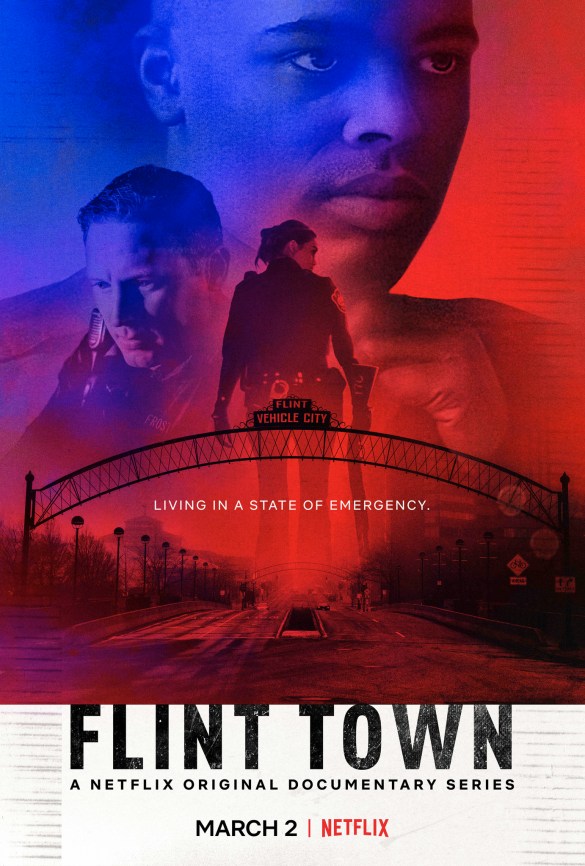
Flint Town

Image Credit: IMDb

I was off work on a recent Friday, and it was so nice to have a little bit of a break. I couldn’t decide what I wanted to watch. This title kept popping up in my Netflix profile, so I figured, “Why not? Let’s try it.”

Before Al came home from work that day, I’d watched the entire season. All eight episodes.

At first, I thought the documentary series was going to be about the police force in Flint, Michigan. It was certainly about that, but also so much more.

Flint Town is a real, gritty, almost unedited profile of these officers and their lives. I got so invested in the story, especially the emotional side, it’s no surprise I plowed through all eight episodes in one day.

In addition to being police officers, you ride along with them as they deal with the continuing water crisis, limited and dwindling resources, and changes in the city administration. Both good and bad.

I wroteย Hot Topic #19: The Water Crisis in Flint, and Othersย in March 2017. The series started before that. And it was compelling, and pretty sickening, to watch.

My heart went out to everyone in Flint. Seeing these interviews – Officers, officers’ family members, city officials, local activists, and members of the community – It’s beyond obvious this city has been struggling for years.

At the same time, toward the end of the series, I started thinking beyond Flint. There are THOUSANDS of other cities in the U.S., not to mention so many others places on this planet of ours, that don’t have safe, clean, acceptable drinking water. I started thinking about my own city – Portsmouth, Virginia – and my water, my city administration, my police force.

Just before I watched this series, the story broke one morning that our own police chief in the City of Portsmouth, Tonya Chapman, had suddenly resigned. When she was hired in 2016, she was the first female, African-American police chief of a municipal force in the entire Commonwealth of Virginia. Currently, Angela Greene, the former Assistant Police Chief, is serving as interim Police Chief until a replacement is hired. But we don’t know when that will be.

And, there continues to be finger-pointing, frustration, and controversy from many different sides, including the city administration, citizens, the local NAACP chapter, and the Fraternal Order of Police.

Flint Town is a story that can easily resonate with many across the United States. It’s a tough one to watch, but it’s a series that is relevant, and thought-provoking.


Until the next headline, Laura Beth ๐Ÿ™‚

Commentary #86: “Reforestation Drones Drop Seeds Instead of Bombs, Planting 100,000 Trees Per Day Each”

Reforestation Drones

Image found on Return to Now.

This is a really intriguing idea. I first saw this story on Facebook, through Return to Now.

The U.K.-based BioCarbon Engineering (BCE) has developed a relatively simple, two-step process for accomplishing this:

  1. Send the drones into the target area to create a detailed, 3-D map.
  2. Send the planting drones back to the mapped site to fire “agri-bullets” into the ground.

In addition, the engineering firm has committed to biodegradable seed pods, and planting multiple species simultaneously. That is awesome!

In June 2017, BCE planted 5,000 trees in one day in coal mine-ravaged Dungog, Australia. The company has also worked in South Africa and New Zealand. They also started working in cyclone-ravaged Myanmar, working to replace destroyed mangroves.


Other websites have published similar accounts within the last year:


For more information, check out the links below:


What do you think about using drones to help fight deforestation and climate change? Let me know in the comments!


Until the next headline, Laura Beth ๐Ÿ™‚

Commentary #84: “As GM’s Lordstown plant idles, an iconic American job nears extinction”

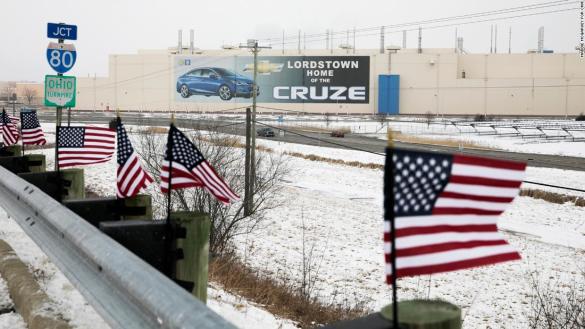
Lordstown GM Plant

Image Credit: CNN

I saw this fascinating CNN article on Wednesday, March 6th:


The Lordstown, Ohio plant has been closed for nearly a week now. It made its last Chevy Cruze sedan on March 6th. Another sign of the times. General Motors (GM) has shrunk from more than 618,000 workers to just north of 100,000 people.

Auto manufacturing in the U.S. has been declining for a while now. The closure of Lordstown is part of GM’s shift in strategy – Away from sedans, more focus on higher-margin trucks and light SUVs, as well as researching and developing electric and autonomous vehicles. GM has also invested in a ridesharing platform called Maven.

In addition to a declining workforce, U.S. auto workers have experienced a drop in wages (Roughly 18 percent since 1990, adjusted for inflation), and less retirement benefits. Just two years ago, only eight percent of factories offered pensions.


Lordstown sits in the Youngstown, Ohio region, halfway between Cleveland and Pittsburgh. The average worker in Youngstown made $38,000 per year in 2017. Compare that to $61,000 to $88,000 per year for full-time GM production workers, according to their United Auto Workers union contract. And that doesn’t include overtime pay and bonuses.

The Lordstown plant started to see changes about two years ago. As the demand for the Cruze sedan declined, the second and third shifts were cut, and 3,000 people were laid off. Of the remaining 1,400 people, about 400 accepted transfers to other plants, and they are able to hold on to their healthcare and pensions. There were 350 workers eligible for retirement. Those transferred workers will receive $30,000 in relocation assistance.

One of the workers interviewed for the article, at GM since 1995, thought she had enough seniority to transfer to another facility, such as the metal fabrication plant in Cleveland or the transmission factory in Toledo. However, relocating is not ideal, either. She’s stuck, quoted as saying GM has her in a “chokehold.”

“I make $32 an hour. I’m not going to go get a $12-an-hour job. I couldn’t survive on that at all. I’m going to get up and go, ride it out, try to get the best gig I can get, and be done with them.” She’s hoping to net her 30 years at GM – which won’t happen until 2025.


The Youngstown region has watched manufacturing slide downhill since the 1970s. The auto industry started to crack less than a decade later, with stiffer competition from Japanese automakers. In 1994, the North American Free Trade Agreement (NAFTA) dealt another blow, as work was outsourced to lower-paying suppliers. In 2007, as the automakers were having systemic issues related to the financial crisis and impending Great Recession, a lower-wage tier was created for entry-level workers, where they made 45 percent less per hour and got a 401(k) rather than a guaranteed pension. GM’s bankruptcy two years later tightened things even further.

For Lordstown, the community has thrived on GM. At one point, GM helped bring more than $2 million in tax revenue, among other benefits to schools and community ventures. Twenty years ago, Lordstown was competing with other cities to win another car model to replace the Chevy Cavalier. The community banded together, and along with plant officials, were successful in winning that car model. The community tried it again in 2018 – Posting signs, writing letters, and working with politicians. Unfortunately, one of the big factors was plant management wasn’t interested in participating this time.

Many are uncertain and fearful. They’ve watched GM shutter, and then re-open, their plant in Spring Hill, Tennessee. What if that happens in Lordstown?

Another problem is many GM workers were hired without secondary education. Nearly two-thirds of the 13,000 purported job openings in Youngstown, including information technology and healthcare, will require a post-secondary credential by 2021.

One bright spot is trade adjustment assistance, available to GM workers through the state and U.S. Department of Commerce. Truck driving certificates have been popular recently, due to the quick turnaround to earning them, and relatively good pay.


As Lordstown begins to adjust to life without GM, the local high school has started a training program for the logistics industry, helping prepare students for jobs in the various distribution centers in the area. Roughly 15 percent of students have parents worked in the plant. And they’ve already begun to experience losses, as families leave to accept those transfers at other GM plants.

TJ Maxx is building a facility that will employ 1,000 people locally. However, the wage difference is drastic. Where many at GM made $30 per hour or more, entry-level listings for other TJ Maxx facilities sit between $10 and $13.50 per hour.

However, Lordstown doesn’t want the shuttered plant to be turned over to Amazon, Tesla, or any other company. Not yet, anyway.


This story isn’t just about one GM plant in one Ohio town. It’s about history, the manufacturing industry, the changes in the American workforce, and what can be done for those who need jobs now.


Resources


Until the next headline, Laura Beth ๐Ÿ™‚

Book Review #68: “Evicted: Poverty and Profit in the American City”

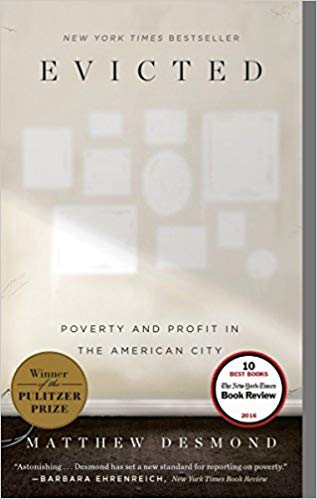
evicted

Image Credit: Amazon

I think I first heard about this book from friends on Facebook, who all said what a powerful book it was.

Then, author Matthew Desmond was interviewed by Terry Gross on NPR’s Fresh Air in April 2018. My local area, Hampton Roads in Virginia, was specifically mentioned in the interview regarding high numbers of evictions in three separate cities. It stung, and propelled me to want to learn more. As soon as possible.


I bought the book in August, and finally started it in late December. But once I started, I could not put it down. By the time we came home from the farm on December 26th, I’d flown through Part One. I was itching to go to bed that night, eager to dive in to Part Two. It only took me a few more nights of intense reading to finish it. I came away from it with a greater understanding, and appreciation, for being able to own my own home with my husband. It’s one of those books that makes me realize how good I have it, especially as a white woman with no children.

I’m drawn to books like this because of the human interest. I was reminded of the term “ethnography,” which is the systematic study of people and cultures. Author Matthew Desmond settled in Milwaukee, in the trailer park and other low-income neighborhoods, to not only interview people for the book, but to learn about their lives, and specifically what they go through day by day. The housing crisis and recession of the late-2000s began while he was conducting interviews, and it’s referenced in the book as well.

However, the housing crisis and recession are not all to blame here. It’s just one factor. There are many other factors involved with eviction and those who struggle with it. Landlords have profited by buying cheap, often dilapidated houses or buildings, charging rent, and then sometimes refusing to fix inherent problems in these properties. The tenants complain, nothing gets fixed, and rent can go unpaid or withheld. There are certain processes for evictions, but they vary greatly. There are voluntary and involuntary procedures. It’s definitely not black-and-white.

When someone is evicted, that goes on their record. It’s exponentially harder for parents with children to find an affordable place to live, and eviction(s) exacerbate that problem. Multiple evictions are even more problematic. It’s a vicious cycle, where parents want to protect their kids from negative influences and crime, but can’t break out of those areas because of their eviction record. Welfare benefits can also be affected. If you’re lucky to have a job, getting evicted can cause immense stress, affecting job performance and more. Choices have to be made, painfully – Pay rent, or the utilities, or the car repair, or a need for your kids. Kids are uprooted, shuffled, changing schools, and also stressed. It’s a horrible experience all around.

Desmond’s dedication to these interviews, living in their space, researching the processes and procedures, and soaking up everything he could about eviction shines through this book. It’s depressing, in more ways than one, but incredibly informative, educational, and eye-opening.

This is one of those books, in my opinion, should be studied and taught in schools, especially upper levels of high schools and colleges/universities. It’s an important issue that needs more focus, discussion, and change.

My eyes were opened widely to the multiple problems regarding eviction. I thought I knew a few things, but this book turned my thinking completely on its head. The book focused specifically on Milwaukee during a set number of years, but there are eviction problems and issues throughout the entire U.S.

That was one of the focuses of Desmond’s interview with Terry Gross – Thanks to receiving a MacArthur Foundation Genius Grant in 2015, Desmond has started The Eviction Lab, where a dedicated team of researchers and students from Princeton University are creating the first-ever eviction database in the U.S. At the time of the interview, in April 2018, the Lab had already collected 83 million records from 48 states and the District of Columbia.

The book was also awarded a Pulitzer Prize in 2017. That says something, too.

“Stabilizing a home has all sorts of positive benefits for a family,” Desmond said in the interview.

Desmond has written two other books, and co-authored one on race. I look forward to reading and seeing more from him.

5 out of 5 stars.


Until the next headline, Laura Beth ๐Ÿ™‚

Commentary #82: “How Iceland Got Teens to Say No to Drugs”

The Atlantic

Image Credit: The Atlantic

I saw this article on Facebook recently. Thanks to Brittany A. for sharing it.

Here’s the link to The Atlantic’s article, published January 19, 2017:


What were you doing in 1997?

According to a local psychologist, Gudberg Jรณnsson, back then most of Iceland’s teens were drinking or drunk. All the time. It felt unsafe.

Fast-forward 20 years. There aren’t teens wandering the park, nearly passed out drunk. There aren’t many wandering teens at all.

Why?

They’re involved in after-school classes, art club, dance, music, or with their families.


Iceland boasts incredibly low percentages of teens drinking, using cannabis, or smoking cigarettes.

Here are the numbers. This was a survey of 15-year-old and 16-year-olds, reporting these activities for the previous month.

Drunk, 1998: 42 percent
Drunk, 2016: 5 percent

Ever used cannabis, 1998: 17 percent
Ever used cannabis, 2016: 7 percent

Smoked cigarettes every day, 1998: 23 percent
Smoked cigarettes every day, 2016: 3 percent

It’s radical, and exciting. But, there’s a method behind it. And if adopted by other countries, it could have a revolutionary change. However, it’s a big if.


In 1992, Project Self-Discovery was formed, offering teenagers “natural-high alternatives to drugs and crime.”

Instead of a treatment-based approach or program, the idea was to allow the kids to learn anything they wanted, including art, music, dance, martial arts. By having the kids learn a variety of things and skills, their brain chemistry was altered, and give them what they needed to cope better with life. Other ways to combat depression, anxiety, numb feelings, etc. Life-skills training was also incorporated.

Research and studies in the early 1990s showed a series of factors that played into Icelandic teens not getting involved with alcohol and drugs: Participating in organized activities three to four times per week, especially sports; total time spent with parents during the week; feeling cared about at school; and not being outdoors in the late evenings.

Youth in Iceland began gradually, before being introduced nationally. Correspondingly, laws were changed. You had to be at least 18 to buy tobacco, and 20 to buy alcohol. Tobacco and alcohol advertising was banned. In addition, another law, still in effect today, prohibitsย children aged between 13 and 16 from being outside after 10 p.m. in winter and midnight in summer.

Another key provision was involving schools and parents. State funding was increased for sports, dance, art, music, and other clubs. Low-income families received help or assistance to take part in these extracurricular activities.

โ€œProtective factors have gone up, risk factors down, and substance use has gone downโ€”and more consistently in Iceland than in any other European country.โ€

Youth in Europe started in 2006. The questionnaires – Sent out to many European countries, South Korea, Nairobi, and Guinea-Bissau – shows “the same protective and risk factors identified in Iceland apply everywhere.”

However, no other country has made changes on the scale seen in Iceland. Sweden has called the laws to keep children indoors in the evenings “the child curfew.”

There are cities that have reported successes, being a part of Youth in Europe. Teen suicide rates are dropping in Bucharest, Romania. Between 2014 and 2015, the number of children committing crimes dropped by a third in another city.

“Oโ€™Toole fully endorses the Icelandic focus on parents, school and the community all coming together to help support kids, and on parents or carers being engaged in young peopleโ€™s lives. Improving support for kids could help in so many ways, he stresses. Even when it comes just to alcohol and smoking, there is plenty of data to show that the older a child is when they have their first drink or cigarette, the healthier they will be over the course of their life.”

Would something like this work in the U.S.?

Not a generic model, nothing exactly like Iceland, but something specifically tailored to individual cities, maybe even individual communities. By working with communities to identify the biggest issues and the biggest needs, maybe adopting facets of the Iceland program may help teenagers, and others, in the U.S.


My two cents: While I do drink alcohol now, I’ve never smoked. I was never tempted by alcohol as a teenager. Not at home with my parents, anyway.

I was involved with music and sports from a very young age – Piano, gymnastics, soccer, then the viola, and softball. My church was another huge part of my life. If I wasn’t in school, at music lessons, or at sports practice, I was likely at church.

Also, I know my parents played a huge role in my life. Being an only child, I know I’m a bit biased. But, we had dinner at the table almost every night. We didn’t eat out a lot. The Internet was new, and no one had a smartphone. We had a computer, but there were strict limits, and more educational games than Web surfing. They were fully present in my life. I may have been sheltered and protected, but it gave me so many benefits.


Until the next headline, Laura Beth ๐Ÿ™‚


Commentary #81: “How One Woman Is Teaching Homeless & Foster Care Children To Dream”

Precious Dreams Foundation

Image Credit: Sam Dahman

A dear friend shared this article on Facebook on November 30th, and I felt compelled to write about it.


Who knew that decorating an ordinary, simple pillowcase could make such an impact?

Nicole Russell, together with volunteers, provides comfort items that help children in transition to self-comfort.

What makes you happy?

What images can help you dream?

Things that many of us take for granted – Warm pajamas, stuffed animals, receiving blankets, books, and journals – This foundation helps provide it!

This is awesome!


If you’re interested in learning more, please see the resources below:


Until the next headline, Laura Beth ๐Ÿ™‚

Commentary #79: “Tiny Houses For Homeless Vets Makes A Lot Of Sense”

Today is Veterans Day. I waited to share this story, because I think it’s important.

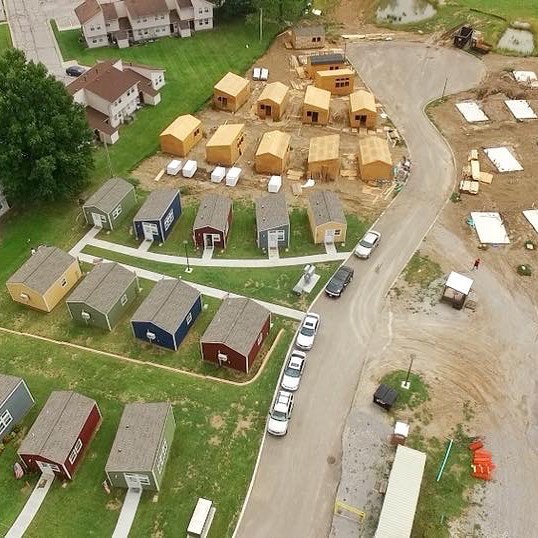
In Kansas City, Missouri, former U.S. Army Corporal Chris Stout is definitely a hero. In more ways than one. Not only did he serve his country, but now he’s giving back to it. Through the Veterans Community Project, tiny homes have been built in the Veterans’ Village, all for veterans who are struggling with homelessness. Chris and several friends quit their jobs in 2015 to start the project, and it’s been blossoming ever since.

The first 13 homes were finished in January. Another 13 will be done by the end of this month. Each house is fully stocked – Furniture, linens, toiletries, food, and even welcome gift baskets.

However, Chris calls the houses the “sexy piece.” The bread and butter is the sense of community, camaraderie, and connecting veterans to the services they need.

In the interview, Chris stated that eight of the original 13 residents have found permanent housing. They take the furniture with them. It takes about 72 hours for a house to set up for a new resident.

The idea is for veterans to get back on their feet, with as much time as they need based on their goals, and get connected with the services they need. While starting the project, Chris found that many didn’t feel safe or have a sense of privacy with traditional shelters. The anticipated length of stay is six months, but as long as they are working on their goals, they’re welcome to stay as long as they like/need.

Another 23 houses are to set to be done by the beginning of 2019. In addition, a community center is nearly finished, which will have medical, dental, and veterinarian care, a barbershop, and a fellowship hall for group events.

When a veteran walks in, the staff gets to work with their bus pass, housing placement, job placement, legal services, food pantry, clothing closet, and emergency financial assistance. So far, the organization has helped more than 8,000 veterans.

More than 650 communities around the country have reached out to Veterans Community Project. They’re growing in Denver, Nashville, St. Louis, and more. Chris’s goal is to be in every major city, helping veterans with what they need.


Chris Stout has already been recognized as a CNN Hero. He’s in the Top 10. The hero with the most votes will receive $100,000 toward their cause. Voting ends December 4th.


Thank you to all veterans! We appreciate your service.


Until the next headline, Laura Beth ๐Ÿ™‚

Commentary #77: “There’s a severe shortage of mental health professionals in rural areas. Here’s why that’s a serious problem.”

Mental Health - Quotefancy

Image Credit: Quotefancy

I recently read another CNN article that I felt was worthy of sharing. It was published on June 20, 2018.

Here’s the link to the article:


For years, I’ve been fascinated with the Appalachian region of the United States. Part of it is because my grandmother (Mom’s mom) was raised in West Virginia, and other extended family members have lived in West Virginia and Kentucky, to name a few states.

The mountains are beautiful. Grandma Grace was raised during The Great Depression, and they survived. I have vague memories of visiting Great-Grandma Laura Bethany (whom I’m named after) on her farm in Ripley, and seeing Mom’s aunt’s and cousins in Beckley. These two areas aren’t deep in the mountains, but you can definitely see and feel the hills and valleys.

With all that said, Ripley and Beckley are small, but mighty. Other areas of West Virginia, and other states in the Appalachian region, have certainly struggled with the volatility of the coal mining industry, among other issues. The limited amount of research I’ve done shows years of struggles with poverty, unemployment, access to health care, and more. However, the Appalachian people are steadfast. I don’t want to be prejudicial, but research-based.

Along with difficulties accessing quality health care, and affording that care, mental health care is somewhat tied to that. It’s fascinating, as well as immensely frightening.

When I was diagnosed with Generalized Anxiety Disorder (GAD) in the summer of 2015, I started taking a bigger interest in mental health, including news articles about the topic. I’m grateful that I have a stable job, with good health insurance, and access to good mental health resources and services.

I’ve seen several counselors since I was in college, for a variety of reasons, but the counselor who diagnosed me with GAD was a watershed moment for me. She helped me unpack a variety of issues that were causing significant stress, and in turn, contributing to my anxiety. I’ve been able to better understand GAD, and to work to figure out the best ways to limit and control my anxiety. It’s a daily exercise, but I’m proud to say that I’m not taking any medication, and I’m able to live a fairly productive life thanks to a powerful and helpful support system. I realize that my situation is very unique, and I’m grateful for everything!


The article is packed with statistics. I won’t go through all of them, but the main point is a majority of non-metropolitan counties do not have a psychiatrist, and nearly half do not have a psychologist. The best definition of a non-metropolitan county that I could find is one that does not have a Metropolitan Statistical Area (MSA) and has a population of 10,000 or less (Health Resources & Services Administration).

One of the interviewees, a clinical psychologist, pointed out that many rural areas only have generalists, i.e., primary care providers (PCPs), and there’s little to no specialized care. People are left on their own due to a lack of community mental health care, and nearby relevant hospital services.

The services that are available are focused on crisis intervention, not prevention. These services attempt to address the crisis as it’s happening, but nothing is available to prevent the crisis.

In addition to the lack of services and resources, health care funding cuts are exacerbating this problem. Roughly 80 rural hospitals closed between 2010 and 2017. Hundreds more are at risk.

Another problem the rural population faces is isolation. Isolation can spark downward spirals, which can lead to drug addiction, overdoses, depression, and suicide. According to the Centers for Disease Control (CDC), rural areas have a higher suicide rate than non-rural areas, which has been widening since 2001.

This is a significantly complex and challenging problem that can’t be addressed with a single solution. However, there’s one bright spot that is starting to emerge – Telebehavioral health. The article provided the example of a patient in Wyoming “seeing” a psychologist in Pennsylvania via virtual sessions and online portals.

As promising as telebehavioral health appears, the article points out a host of other issues that rural residents face. Access to the Internet is one, being proficient with computers / technology another, and having the financial resources to access these mental health professionals.

To me, there needs to be a series of steps to tackle these issues. I don’t have all the answers, and I try to be as objective as possible.

There needs to be consistent investment in mental health services across the U.S. Every rural area that does not have a psychiatrist or psychologist should probably have at least one of each. The currently practicing doctors should be linked up to the existing mental health services, as well as be / become advocates for improving those services. Continued work to reduce the stigma of mental illness, addiction, and other mental health issues will also be beneficial.

Those support systems that people turn to in the event of a crisis – Family, friends, ministers, chaplains, and even first responders – should also have connections to mental health services. More mental health training for these support systems, specialized if possible, is also a good idea.

Throughout the network of ideas and potential solutions, the idea of making and sustaining connections and cooperation appears to be a common theme. In order to help the neediest residents, everyone involved with helping them should be educated, connected, and cooperative.

Example: Someone in a rural area is struggling with isolation and drug addiction, and overdoses. When the family member calls for an ambulance, the first responders take the resident to the local or nearest hospital. While recovering in the hospital, a series of people work behind the scenes to quickly identify others that can help – Family members, the hospital chaplain, the resident’s pastor, the resident’s primary care physician, and anyone else. Together, this network of resources work together to locate the nearest psychiatrist or psychologist, or even the nearest behavioral health center. The idea is to build a strong support system to get the resident the best mental health services possible.

This is strictly an example, but ideally, there needs to multiple levels of support and accountability for this to work. Every situation is different – Sometimes there’s no family, no primary care physician, difficulty accessing a behavioral health center, among other things. Regardless, if we invest in building these networks and support systems, maybe there can be a shift in crisis prevention, and less crisis intervention.


For more information, check out these resources. Several of these were also cited in the article.


Until the next headline, Laura Beth ๐Ÿ™‚

Commentary #75: “The war on drugs failed. It’s time for a war on abuse.”

Honor Blackman

Image Credit: AZ Quotes

The headline grabbed me instantly. It spoke to me.

Here’s the link to the opinion that CNN published on their website on Friday, June 15, 2018:


Full disclosure: This was published under CNN’s Opinion section.

CNN also published this Editor’s Note at the top of the page:ย Natalie Schreyer is a reporter at the Fuller Project for International Reporting, a nonprofit news organization that covers issues impacting women and girls globally. She is working on “Abused in America,” a Fuller Project initiative to cover domestic violence in the United States. Jessica Klein is a journalist and co-author of the book “Abetting Batterers: What Police, Prosecutors, and Courts Aren’t Doing to Protect America’s Women.” The views expressed here are solely those of the authors.


I read this opinion. And then I re-read it. It stuck with me all weekend long. It’s still with me as I finish writing this post.

The comparisons that Schreyer and Klein make are staggering. After reading it several times, it makes complete sense to me.

Sure, I’m definitely biased here. I am a domestic violence survivor. I am an abuse survivor. Neither of these are ever okay. I’ve read several powerful memoirs and accounts of survivors (Tornado Warning), and stories of those who tragically lost their lives (If I Am Missing Or Dead: A Sister’s Story of Love, Murder, and Liberation) over the years. I don’t want to read new ones, if I’m being perfectly honest.

There must be harsher punishments for habitual offenders. The opening story for this opinion both broke my heart and made my blood boil – An alleged abuser has never been convicted of a crime, despite 160 encounters with police in 15 years. Quick math – That’s an average of 11 encounters per year. That’s too many.

One encounter is too many.

It took way too long for the current stalking laws to be enacted, and even now, those laws aren’t necessarily the same in every one of the 50 states (although it absolutely should be). The problem here is there’s a lack of consistency. The power is usually left up to the states, and that’s where many problems lie. Where you live is a huge factor, and it absolutely shouldn’t be that way!

But, what about all these non-violent offenders, in prison for decades on drug charges?

I could write a proverbial book. What the Nixon administration started in 1971 was a so-called “war” that will never be won. Presidents Reagan and H.W. Bush kept fueling the fire. I myself was in the D.A.R.E. program in fifth grade. I vowed to never smoke cigarettes after watching my grandmother, my dad’s mom. She lived with emphysema for more than 20 years. She also had COPD, and was on oxygen since I was a child.

Now, in 2018, our country has been facing the “opioid crisis” for several years. Like the authors argue, “addicts who need medical treatment more than criminal punishment,” is so true. And, sadly, not likely to happen. There is a lack of investment in mental health treatment and addiction treatment. Addicts need resources such as medical intervention, quality treatment facilities, quality therapy and/or counseling, and continued support for as long as necessary to keep them sober, stable, and functional.

Why? We have more people in prison for drug possession than mental health treatment facilities. These men and women (not all, mind you), unfortunately, re-offend and get sent back to prison because they can’t get a good, steady job after being released. Struggling to support themselves and their families, they turn to what they’ve known as their source of income. And they’re stuck in this vicious cycle that doesn’t seem to end.

When I think of an “addict,” I think of someone involved with drugs such as heroin, methamphetamine, or crack. The harder, more dangerous drugs.

To think of how many people (many are people of color, too) are in jail or prison for non-violent marijuana offenses makes me incredibly angry. I’ve been supportive of the interest to legalize / de-criminalize marijuana. But, that’s another story altogether.

There needs to be far more accountability on the domestic violence and abuser side, however. The authors pointed to a fascinating report from The University of North Carolina at Greensboro, which focused on High Point, North Carolina. When the focus was shifted toward cracking down on intimate partner violence, the number of intimate partner murders dropped from 17 (between 2004-2011) to just one (between 2012-2014).

Numbers are powerful. Seventeen murders dropped to one? Wow.

As I mentioned earlier, the current stalking laws took way too long to pass. Now, there really should be domestic violence courts in every state. The script should be flipped – Turn the thousands of drug courts (3,100 quoted in the opinion) into domestic violence courts. Problem solved? Maybe.

I’m not saying to get rid of drug courts altogether. What I’m saying is to shift the balance. Shift the balance of the number of courts, and maybe that will also shift the balance of power.

I certainly don’t have all the answers. I just feel strongly about the issues presented in this opinion. I hope more is done for all victims of domestic violence and abuse. No one deserves to go through the horror, shame, and terror. And this includes women, men, and children. There’s a lot of focus on women, but men and children are abused and violated every single day.


For more information, check out these resources. Many of these were also cited in the opinion.


Until the next headline, Laura Beth ๐Ÿ™‚

Commentary #63: “Awareness vs. Understanding”

Image Credit: TOBYMAC

I started following Caralyn’s awesome blog, Beauty Beyond Bones, a while back. She is an awesome, amazing woman. I love all of her posts!

She always shares something profound, or thought-provoking, every week. This past week was no exception.

Here’s the link to her post, published on February 22nd:


Caralyn’s focus is her journey after her eating disorder (ED). She’s a beautiful woman, who is an activist for so many causes. She posts recipes, too!

This particular post shined a spotlight on Weight Watchers being in the news last week, and not for a good reason.

They announced they would be offering free memberships to teens, ages 13-17.

Naturally, this caused almost immediate backlash.

I’m with Caralyn. I don’t agree with Weight Watchers offering these free memberships. Teens, ages 13-17, have enough to deal with in their lives. Yes, obesity remains a significant issue. Caralyn cited several statistics, including some from the Centers for Disease Control (CDC). But, for Weight Watchers to offer these free memberships to this very vulnerable age group is not the answer.

She tied the Weight Watchers news in withย National Eating Disorder Awareness Week (NEDA), which starts today, February 26th, and runs through March 3rd.

I see her point about viewing NEDA with somehow glorifying the disease, and so on. But, then she realized that the news about Weight Watchers is one reason why conversations need to be had.

And then, she hit on the Awareness vs. Understanding point, which I think is so important.

There is a difference.

Awareness is certainly important, and a good thing – Share stories, come together as a community, and so on.

However, understanding is even more paramount. With something like eating disorders, moving beyond awareness into understanding is critical.

With that said, I cannot say that I empathize with Caralyn, or say that blanket statement of “I understand” at all. I have never had an eating disorder. I know what they are, how they start, the basics. You could say that Laura Beth is aware of eating disorders.

Caralyn, however, truly understands eating disorders. She is a survivor. She is an advocate. She works hard to discuss ED, her own journey, and help others, which I find incredibly admirable. In her post, she writes that “an eating disorder is a mental illness.”

She closed her post with wanting to “foster understanding on this anorexia recovery blog” and “answering any and all questions about eating disorders, recovery, treatment, how to support. Nothing is off limits.”

I think this is wonderful! She, of all people, knows what she’s talking about. She writes beautifully and humbly, too.

So, if you’re interested in asking questions or learning more, check out her blog!


img_3185

Image Credit: BeautyBeyondBones

To me, Caralyn is a source of inspiration. Thank you for being amazing!!


Until the next headline, Laura Beth ๐Ÿ™‚