Book Review #72: “Columbine” *Re-Read*

I try my hardest to post Book Reviews within 24-48 hours after finishing the book. However, life has been pretty hectic recently. I finished Columbine in mid-April, just after the acknowledgment of it being 20 years since the tragedy. I’m just now posting my review.

I have a special connection with this book. The author, Dave Cullen, came to Longwood in the spring of 2010 as a guest lecturer. I was able to interview him for an article I wrote for the student newspaper, The Rotunda. He graciously signed my copy when I bought it at his lecture. It was strange, reading his message from March 17, 2010. That feels like a lifetime ago!

I’m glad I re-read this book. I remember how I felt after I read it the first time. Part of me wishes I’d re-read it before now, before nine years had passed. However, I still felt similar emotions as I did the first time.

I have to give major props to Cullen on his research and dedication to this book. This is one of the best accounts I’ve read of the events that occurred on April 20, 1999. And Cullen goes deeper than that. He covers the massacre, but also delves into the lives of the shooters, their families, and survivors.

It’s not perfect, but as someone who originally read memoir-style books such as The Journals of Rachel Scott: A Journey of Faith at Columbine High and She Said Yes: The Unlikely Martyrdom of Cassie Bernall years ago, when the tragedy was still relatively fresh (I was almost 10 when it occurred), I appreciate the time and effort Cullen devoted to this book.

If you haven’t read this book, I highly recommend it. Cullen makes it clear that he is a journalist first, and it’s evident throughout. His amount of sources is simply incredible. It’s very dense, and tough to read, but it’s an important work. I’m glad Cullen devoted many years to writing this book.

4 1/2 out of 5 stars.


Until the next headline, Laura Beth 🙂

Book Review #71: “Nickel and Dimed: On (Not) Getting by in America” *Re-Read*

Nickel and Dimed

Image Credit: Goodreads

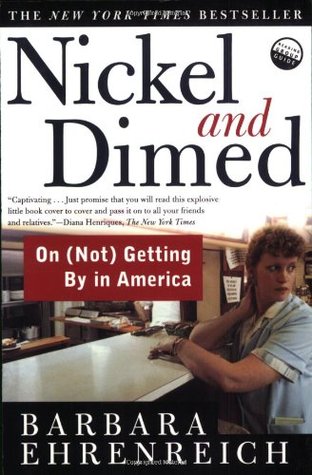
When I initially read this book, it was assigned reading for one of my very first college classes. I can’t remember which one, but this book left a profound impact on me. Slowly, I started reading more from Barbara Ehrenreich. However, this is the book that started it all.

I started college in the fall of 2007, about a year before the financial crisis that began in 2008. I believe I was assigned to read this book at a poignant time. I also believe I’m re-reading this book at another poignant time, at the beginning of 2019.

Going into re-reading this, I realized my copy of the book was updated with a new afterword, published in 2008. However, the overall concept – Studying low-wage jobs and attempting to understand their socioeconomic impacts – is nothing new. That’s part of the reason I was drawn to Matthew Desmond’s Evicted: Poverty and Profit in the American City.

Ehrenreich embarked on an experiment in 1998 – Trying to see if she, as a single, middle-aged woman, could survive as a waitress, a cleaner (hotel maid and house cleaner), a nursing home aide, and a seller / retail associate for a month, in three different cities. Each chapter explores a different type of job and a different city. She quickly realized the challenges with each one, and each city presented its own obstacles with housing, food, and assistance. Along the way, she met a variety of people working these jobs. A few were fortunate, but many were barely making ends meet. Several were working 2-3 jobs full-time, and still struggling with their incomes and their partner’s / spouse’s income(s) as well.

I won’t spoil anything, but she learns many lessons along the way. She discovers multiple issues with affordable housing, child care costs, fast food, health care, education, and the way these companies treat their employees.

I got a bit lost with the footnotes, statistics, and percentages, and glossed over a few of them toward the end. However, reading the updated afterword was important, and appreciated. This country has a lot to learn, still, in 2019. We need to treat employees, especially those earning the absolute minimum, better.

Overall, I’m glad I took the time to re-read this book. It’s a bit “dated” now, since Ehrenreich’s experiment started and concluded 21 years ago. However, it’s still relevant in many aspects today. And, like her, I’m grateful for everything I’ve had and worked for. This is a valuable book that will stay on my bookshelf forever.

4 out of 5 stars.


Until the next headline, Laura Beth 🙂

Commentary #82: “How Iceland Got Teens to Say No to Drugs”

The Atlantic

Image Credit: The Atlantic

I saw this article on Facebook recently. Thanks to Brittany A. for sharing it.

Here’s the link to The Atlantic’s article, published January 19, 2017:


What were you doing in 1997?

According to a local psychologist, Gudberg JĂłnsson, back then most of Iceland’s teens were drinking or drunk. All the time. It felt unsafe.

Fast-forward 20 years. There aren’t teens wandering the park, nearly passed out drunk. There aren’t many wandering teens at all.

Why?

They’re involved in after-school classes, art club, dance, music, or with their families.


Iceland boasts incredibly low percentages of teens drinking, using cannabis, or smoking cigarettes.

Here are the numbers. This was a survey of 15-year-old and 16-year-olds, reporting these activities for the previous month.

Drunk, 1998: 42 percent
Drunk, 2016: 5 percent

Ever used cannabis, 1998: 17 percent
Ever used cannabis, 2016: 7 percent

Smoked cigarettes every day, 1998: 23 percent
Smoked cigarettes every day, 2016: 3 percent

It’s radical, and exciting. But, there’s a method behind it. And if adopted by other countries, it could have a revolutionary change. However, it’s a big if.


In 1992, Project Self-Discovery was formed, offering teenagers “natural-high alternatives to drugs and crime.”

Instead of a treatment-based approach or program, the idea was to allow the kids to learn anything they wanted, including art, music, dance, martial arts. By having the kids learn a variety of things and skills, their brain chemistry was altered, and give them what they needed to cope better with life. Other ways to combat depression, anxiety, numb feelings, etc. Life-skills training was also incorporated.

Research and studies in the early 1990s showed a series of factors that played into Icelandic teens not getting involved with alcohol and drugs: Participating in organized activities three to four times per week, especially sports; total time spent with parents during the week; feeling cared about at school; and not being outdoors in the late evenings.

Youth in Iceland began gradually, before being introduced nationally. Correspondingly, laws were changed. You had to be at least 18 to buy tobacco, and 20 to buy alcohol. Tobacco and alcohol advertising was banned. In addition, another law, still in effect today, prohibits children aged between 13 and 16 from being outside after 10 p.m. in winter and midnight in summer.

Another key provision was involving schools and parents. State funding was increased for sports, dance, art, music, and other clubs. Low-income families received help or assistance to take part in these extracurricular activities.

“Protective factors have gone up, risk factors down, and substance use has gone down—and more consistently in Iceland than in any other European country.”

Youth in Europe started in 2006. The questionnaires – Sent out to many European countries, South Korea, Nairobi, and Guinea-Bissau – shows “the same protective and risk factors identified in Iceland apply everywhere.”

However, no other country has made changes on the scale seen in Iceland. Sweden has called the laws to keep children indoors in the evenings “the child curfew.”

There are cities that have reported successes, being a part of Youth in Europe. Teen suicide rates are dropping in Bucharest, Romania. Between 2014 and 2015, the number of children committing crimes dropped by a third in another city.

“O’Toole fully endorses the Icelandic focus on parents, school and the community all coming together to help support kids, and on parents or carers being engaged in young people’s lives. Improving support for kids could help in so many ways, he stresses. Even when it comes just to alcohol and smoking, there is plenty of data to show that the older a child is when they have their first drink or cigarette, the healthier they will be over the course of their life.”

Would something like this work in the U.S.?

Not a generic model, nothing exactly like Iceland, but something specifically tailored to individual cities, maybe even individual communities. By working with communities to identify the biggest issues and the biggest needs, maybe adopting facets of the Iceland program may help teenagers, and others, in the U.S.


My two cents: While I do drink alcohol now, I’ve never smoked. I was never tempted by alcohol as a teenager. Not at home with my parents, anyway.

I was involved with music and sports from a very young age – Piano, gymnastics, soccer, then the viola, and softball. My church was another huge part of my life. If I wasn’t in school, at music lessons, or at sports practice, I was likely at church.

Also, I know my parents played a huge role in my life. Being an only child, I know I’m a bit biased. But, we had dinner at the table almost every night. We didn’t eat out a lot. The Internet was new, and no one had a smartphone. We had a computer, but there were strict limits, and more educational games than Web surfing. They were fully present in my life. I may have been sheltered and protected, but it gave me so many benefits.


Until the next headline, Laura Beth 🙂


Commentary #81: “How One Woman Is Teaching Homeless & Foster Care Children To Dream”

Precious Dreams Foundation

Image Credit: Sam Dahman

A dear friend shared this article on Facebook on November 30th, and I felt compelled to write about it.


Who knew that decorating an ordinary, simple pillowcase could make such an impact?

Nicole Russell, together with volunteers, provides comfort items that help children in transition to self-comfort.

What makes you happy?

What images can help you dream?

Things that many of us take for granted – Warm pajamas, stuffed animals, receiving blankets, books, and journals – This foundation helps provide it!

This is awesome!


If you’re interested in learning more, please see the resources below:


Until the next headline, Laura Beth 🙂
Commentary #80: “You have two ages, chronological and biological. Here’s why it matters”

Aging Quote

Image Credit: BrainyQuote

This article on CNN.com, posted on November 30th, immediately caught my eye.


Your chronological age is fairly self-explanatory – It’s based on your birthday.

Your biological age is a bit more complicated – It’s called someone’s phenotypic age.

Phenotypic: Relating to the observable characteristics of an individual resulting from the interaction of its genotype with the environment.

Remember biology class?

Long story short: Your biological age determines health and lifespan.

Morgan Levine, a professor and researcher at Yale Medical School, worked with her team to identify nine biomarkers in a simple blood test. Some of these biomarkers include blood sugar, kidney and liver measures, and immune and inflammatory measures.

The bottom line: People who have a lower biological age than their chronological age have a lower mortality risk.

What’s interesting about Levine and her team’s research is that your biological age is not permanent. It can be adjusted. Meaning, changing things like lifestyle, diet, exercise, and sleep habits can lower one’s mortality risk and improve one’s biological age.

Currently, Levine is working to provide access to the algorithm online so that anyone can calculate their biological age, and take further steps to improve it.


For more information:

What do you think? Let me know in the comments!


Until the next headline, Laura Beth 🙂

Commentary #79: “Tiny Houses For Homeless Vets Makes A Lot Of Sense”

Today is Veterans Day. I waited to share this story, because I think it’s important.

In Kansas City, Missouri, former U.S. Army Corporal Chris Stout is definitely a hero. In more ways than one. Not only did he serve his country, but now he’s giving back to it. Through the Veterans Community Project, tiny homes have been built in the Veterans’ Village, all for veterans who are struggling with homelessness. Chris and several friends quit their jobs in 2015 to start the project, and it’s been blossoming ever since.

The first 13 homes were finished in January. Another 13 will be done by the end of this month. Each house is fully stocked – Furniture, linens, toiletries, food, and even welcome gift baskets.

However, Chris calls the houses the “sexy piece.” The bread and butter is the sense of community, camaraderie, and connecting veterans to the services they need.

In the interview, Chris stated that eight of the original 13 residents have found permanent housing. They take the furniture with them. It takes about 72 hours for a house to set up for a new resident.

The idea is for veterans to get back on their feet, with as much time as they need based on their goals, and get connected with the services they need. While starting the project, Chris found that many didn’t feel safe or have a sense of privacy with traditional shelters. The anticipated length of stay is six months, but as long as they are working on their goals, they’re welcome to stay as long as they like/need.

Another 23 houses are to set to be done by the beginning of 2019. In addition, a community center is nearly finished, which will have medical, dental, and veterinarian care, a barbershop, and a fellowship hall for group events.

When a veteran walks in, the staff gets to work with their bus pass, housing placement, job placement, legal services, food pantry, clothing closet, and emergency financial assistance. So far, the organization has helped more than 8,000 veterans.

More than 650 communities around the country have reached out to Veterans Community Project. They’re growing in Denver, Nashville, St. Louis, and more. Chris’s goal is to be in every major city, helping veterans with what they need.


Chris Stout has already been recognized as a CNN Hero. He’s in the Top 10. The hero with the most votes will receive $100,000 toward their cause. Voting ends December 4th.


Thank you to all veterans! We appreciate your service.


Until the next headline, Laura Beth 🙂

Getting Personal #135: Reflections, On My Birthday

Birthday Quote 2018

Image Credit: BrainyQuote

This is the third birthday reflection post I’ve written. I wrote the first in 2016, and enjoyed it so much, that I did it again in 2017.

Now, here we are in August 2018. For those who don’t know, I turn 30 today. It’s kind of crazy, but so exciting!


We’ve owned our house for two years now. We continue to have stable jobs, with a few much-appreciated raises and bonuses thrown in. Last year, we celebrated seven years together, added two new members to our family with Savy and Mia, and toasted to two years of marriage. We spent a week with Al’s family during Thanksgiving, and then a quiet Christmas here at home. It was definitely a cold winter – Lots of blizzards!

This year, we finally did our HVAC overhaul, and we’re so happy we did. We’ve seen a ton of movies, and tried several new recipes. Thanks to my awesome father-in-law, I now have a beautiful custom display case and wardrobe for my American Girl dolls. We’re getting better at going to the gym during the weekday mornings, and riding our bikes around the neighborhood at night.

As the summer is starting to wind down, we’re eagerly awaiting the arrival of our greyhound! Look for the first blog post about him in mid-September!


Reflecting on my long birthday weekend celebration, I’m immensely grateful for all the time I’ve been able to spend with so many people – Al, my parents, my church family, my office family, Al’s co-workers, wonderful family friends, Al’s parents, Nick and Savy, and their new puppy! There has been an abundance of food, hugs, warm wishes, thoughts, appreciation, cards, and love! I saw two wonderful movies as well, Christopher Robin and Mamma Mia! Here We Go Again, surrounded by family and friends.

I can’t wait to see what this new decade has to offer!!


Until the next headline, Laura Beth 🙂

Commentary #77: “There’s a severe shortage of mental health professionals in rural areas. Here’s why that’s a serious problem.”

Mental Health - Quotefancy

Image Credit: Quotefancy

I recently read another CNN article that I felt was worthy of sharing. It was published on June 20, 2018.

Here’s the link to the article:


For years, I’ve been fascinated with the Appalachian region of the United States. Part of it is because my grandmother (Mom’s mom) was raised in West Virginia, and other extended family members have lived in West Virginia and Kentucky, to name a few states.

The mountains are beautiful. Grandma Grace was raised during The Great Depression, and they survived. I have vague memories of visiting Great-Grandma Laura Bethany (whom I’m named after) on her farm in Ripley, and seeing Mom’s aunt’s and cousins in Beckley. These two areas aren’t deep in the mountains, but you can definitely see and feel the hills and valleys.

With all that said, Ripley and Beckley are small, but mighty. Other areas of West Virginia, and other states in the Appalachian region, have certainly struggled with the volatility of the coal mining industry, among other issues. The limited amount of research I’ve done shows years of struggles with poverty, unemployment, access to health care, and more. However, the Appalachian people are steadfast. I don’t want to be prejudicial, but research-based.

Along with difficulties accessing quality health care, and affording that care, mental health care is somewhat tied to that. It’s fascinating, as well as immensely frightening.

When I was diagnosed with Generalized Anxiety Disorder (GAD) in the summer of 2015, I started taking a bigger interest in mental health, including news articles about the topic. I’m grateful that I have a stable job, with good health insurance, and access to good mental health resources and services.

I’ve seen several counselors since I was in college, for a variety of reasons, but the counselor who diagnosed me with GAD was a watershed moment for me. She helped me unpack a variety of issues that were causing significant stress, and in turn, contributing to my anxiety. I’ve been able to better understand GAD, and to work to figure out the best ways to limit and control my anxiety. It’s a daily exercise, but I’m proud to say that I’m not taking any medication, and I’m able to live a fairly productive life thanks to a powerful and helpful support system. I realize that my situation is very unique, and I’m grateful for everything!


The article is packed with statistics. I won’t go through all of them, but the main point is a majority of non-metropolitan counties do not have a psychiatrist, and nearly half do not have a psychologist. The best definition of a non-metropolitan county that I could find is one that does not have a Metropolitan Statistical Area (MSA) and has a population of 10,000 or less (Health Resources & Services Administration).

One of the interviewees, a clinical psychologist, pointed out that many rural areas only have generalists, i.e., primary care providers (PCPs), and there’s little to no specialized care. People are left on their own due to a lack of community mental health care, and nearby relevant hospital services.

The services that are available are focused on crisis intervention, not prevention. These services attempt to address the crisis as it’s happening, but nothing is available to prevent the crisis.

In addition to the lack of services and resources, health care funding cuts are exacerbating this problem. Roughly 80 rural hospitals closed between 2010 and 2017. Hundreds more are at risk.

Another problem the rural population faces is isolation. Isolation can spark downward spirals, which can lead to drug addiction, overdoses, depression, and suicide. According to the Centers for Disease Control (CDC), rural areas have a higher suicide rate than non-rural areas, which has been widening since 2001.

This is a significantly complex and challenging problem that can’t be addressed with a single solution. However, there’s one bright spot that is starting to emerge – Telebehavioral health. The article provided the example of a patient in Wyoming “seeing” a psychologist in Pennsylvania via virtual sessions and online portals.

As promising as telebehavioral health appears, the article points out a host of other issues that rural residents face. Access to the Internet is one, being proficient with computers / technology another, and having the financial resources to access these mental health professionals.

To me, there needs to be a series of steps to tackle these issues. I don’t have all the answers, and I try to be as objective as possible.

There needs to be consistent investment in mental health services across the U.S. Every rural area that does not have a psychiatrist or psychologist should probably have at least one of each. The currently practicing doctors should be linked up to the existing mental health services, as well as be / become advocates for improving those services. Continued work to reduce the stigma of mental illness, addiction, and other mental health issues will also be beneficial.

Those support systems that people turn to in the event of a crisis – Family, friends, ministers, chaplains, and even first responders – should also have connections to mental health services. More mental health training for these support systems, specialized if possible, is also a good idea.

Throughout the network of ideas and potential solutions, the idea of making and sustaining connections and cooperation appears to be a common theme. In order to help the neediest residents, everyone involved with helping them should be educated, connected, and cooperative.

Example: Someone in a rural area is struggling with isolation and drug addiction, and overdoses. When the family member calls for an ambulance, the first responders take the resident to the local or nearest hospital. While recovering in the hospital, a series of people work behind the scenes to quickly identify others that can help – Family members, the hospital chaplain, the resident’s pastor, the resident’s primary care physician, and anyone else. Together, this network of resources work together to locate the nearest psychiatrist or psychologist, or even the nearest behavioral health center. The idea is to build a strong support system to get the resident the best mental health services possible.

This is strictly an example, but ideally, there needs to multiple levels of support and accountability for this to work. Every situation is different – Sometimes there’s no family, no primary care physician, difficulty accessing a behavioral health center, among other things. Regardless, if we invest in building these networks and support systems, maybe there can be a shift in crisis prevention, and less crisis intervention.


For more information, check out these resources. Several of these were also cited in the article.


Until the next headline, Laura Beth 🙂

Commentary #75: “The war on drugs failed. It’s time for a war on abuse.”

Honor Blackman

Image Credit: AZ Quotes

The headline grabbed me instantly. It spoke to me.

Here’s the link to the opinion that CNN published on their website on Friday, June 15, 2018:


Full disclosure: This was published under CNN’s Opinion section.

CNN also published this Editor’s Note at the top of the page: Natalie Schreyer is a reporter at the Fuller Project for International Reporting, a nonprofit news organization that covers issues impacting women and girls globally. She is working on “Abused in America,” a Fuller Project initiative to cover domestic violence in the United States. Jessica Klein is a journalist and co-author of the book “Abetting Batterers: What Police, Prosecutors, and Courts Aren’t Doing to Protect America’s Women.” The views expressed here are solely those of the authors.


I read this opinion. And then I re-read it. It stuck with me all weekend long. It’s still with me as I finish writing this post.

The comparisons that Schreyer and Klein make are staggering. After reading it several times, it makes complete sense to me.

Sure, I’m definitely biased here. I am a domestic violence survivor. I am an abuse survivor. Neither of these are ever okay. I’ve read several powerful memoirs and accounts of survivors (Tornado Warning), and stories of those who tragically lost their lives (If I Am Missing Or Dead: A Sister’s Story of Love, Murder, and Liberation) over the years. I don’t want to read new ones, if I’m being perfectly honest.

There must be harsher punishments for habitual offenders. The opening story for this opinion both broke my heart and made my blood boil – An alleged abuser has never been convicted of a crime, despite 160 encounters with police in 15 years. Quick math – That’s an average of 11 encounters per year. That’s too many.

One encounter is too many.

It took way too long for the current stalking laws to be enacted, and even now, those laws aren’t necessarily the same in every one of the 50 states (although it absolutely should be). The problem here is there’s a lack of consistency. The power is usually left up to the states, and that’s where many problems lie. Where you live is a huge factor, and it absolutely shouldn’t be that way!

But, what about all these non-violent offenders, in prison for decades on drug charges?

I could write a proverbial book. What the Nixon administration started in 1971 was a so-called “war” that will never be won. Presidents Reagan and H.W. Bush kept fueling the fire. I myself was in the D.A.R.E. program in fifth grade. I vowed to never smoke cigarettes after watching my grandmother, my dad’s mom. She lived with emphysema for more than 20 years. She also had COPD, and was on oxygen since I was a child.

Now, in 2018, our country has been facing the “opioid crisis” for several years. Like the authors argue, “addicts who need medical treatment more than criminal punishment,” is so true. And, sadly, not likely to happen. There is a lack of investment in mental health treatment and addiction treatment. Addicts need resources such as medical intervention, quality treatment facilities, quality therapy and/or counseling, and continued support for as long as necessary to keep them sober, stable, and functional.

Why? We have more people in prison for drug possession than mental health treatment facilities. These men and women (not all, mind you), unfortunately, re-offend and get sent back to prison because they can’t get a good, steady job after being released. Struggling to support themselves and their families, they turn to what they’ve known as their source of income. And they’re stuck in this vicious cycle that doesn’t seem to end.

When I think of an “addict,” I think of someone involved with drugs such as heroin, methamphetamine, or crack. The harder, more dangerous drugs.

To think of how many people (many are people of color, too) are in jail or prison for non-violent marijuana offenses makes me incredibly angry. I’ve been supportive of the interest to legalize / de-criminalize marijuana. But, that’s another story altogether.

There needs to be far more accountability on the domestic violence and abuser side, however. The authors pointed to a fascinating report from The University of North Carolina at Greensboro, which focused on High Point, North Carolina. When the focus was shifted toward cracking down on intimate partner violence, the number of intimate partner murders dropped from 17 (between 2004-2011) to just one (between 2012-2014).

Numbers are powerful. Seventeen murders dropped to one? Wow.

As I mentioned earlier, the current stalking laws took way too long to pass. Now, there really should be domestic violence courts in every state. The script should be flipped – Turn the thousands of drug courts (3,100 quoted in the opinion) into domestic violence courts. Problem solved? Maybe.

I’m not saying to get rid of drug courts altogether. What I’m saying is to shift the balance. Shift the balance of the number of courts, and maybe that will also shift the balance of power.

I certainly don’t have all the answers. I just feel strongly about the issues presented in this opinion. I hope more is done for all victims of domestic violence and abuse. No one deserves to go through the horror, shame, and terror. And this includes women, men, and children. There’s a lot of focus on women, but men and children are abused and violated every single day.


For more information, check out these resources. Many of these were also cited in the opinion.


Until the next headline, Laura Beth 🙂

Getting Personal #127: My Skin & Makeup Routines (Part 5)

Lush

Image Credit: LUSH UK

I’m trying some new things, so it’s time to write another Skin & Makeup Routine post!

Here are the links to my original posts:


Skin

I’m continuing my normal routine with a combo of my standard LUSH and Young Living products, but I wanted to share some new things I’ve purchased since my last post.

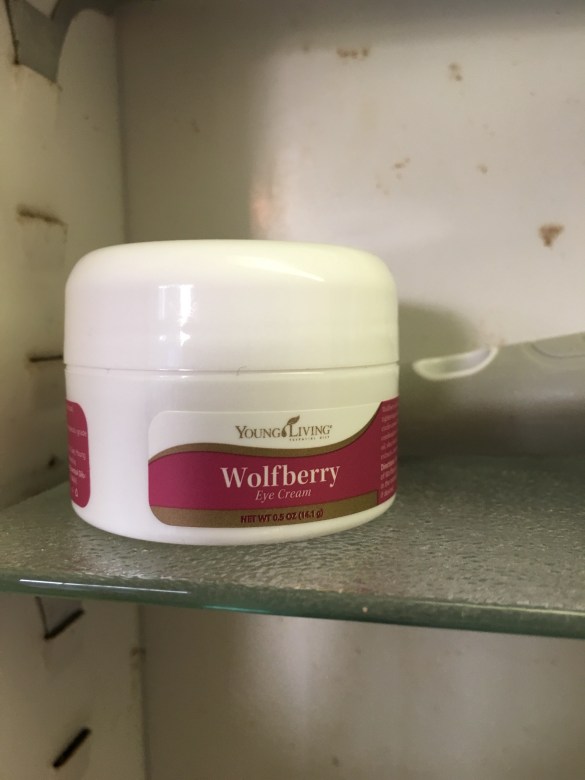
I took the Wolfberry Eye Cream with me on my recent trip to Blacksburg, and I love it!

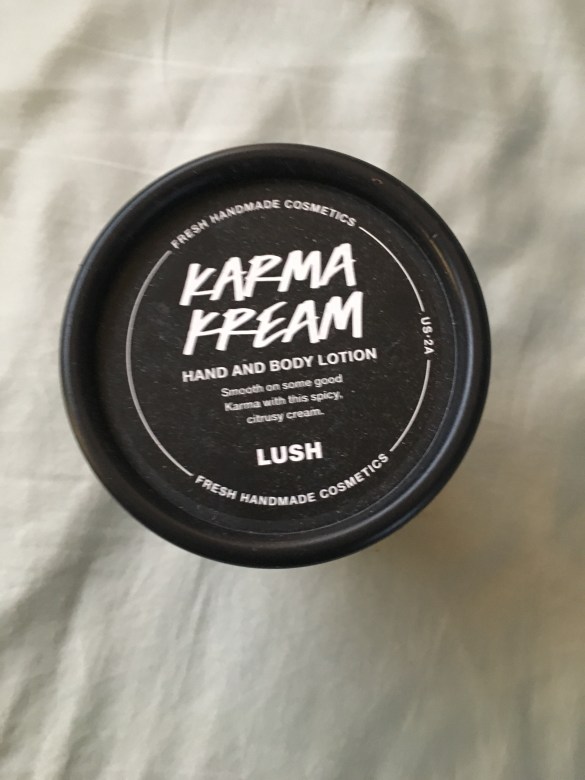
Karma Kream is my new favorite body lotion. It’s perfect for right after I shave my legs!

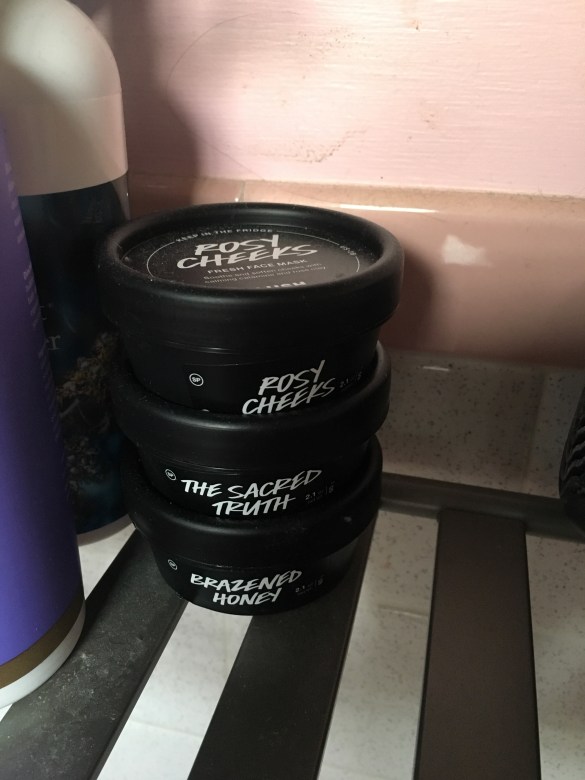
These are three face masks that I received for free during my last trip to LUSH, which was at the end of April. If you redeem five empty and clean pots, you get a free face mask of your choice! Since I had 16 empty and clean pots, they gave me all three at once.

Since the last update, I started supporting a friend’s business with Rodan + Fields. I started with their Lash Boost. I’ve been using it for nearly two months. In just seven weeks, I’ve seen a massive difference! My eyelashes are fuller, darker, and I’ve lost less of them. I also don’t wear a lot of mascara anymore!

img_1612

Using Lash Boost is super simple! It’s the same concept as eyeliner on your lids. Once a day, swipe, swipe, and done!

I also took the quiz called “Finding Your Regimen” with their Solution Tool. Since skin cancer is very prevalent in my family, and I have the “fair skin curse,” I wanted to see what this said. After all, Rodan + Fields are two dermatologists!

My personalized recommendation was Reverse Lightening. So, I ordered it. Granted, I haven’t had a chance to start using it yet, since it’s a new regimen from what my skin has been used to. Hopefully I can start it over this weekend!


In addition, a while back I saw that Young Living offered something called the Bon Voyage Travel Pack. I added to my monthly order, and I’m so glad I did. This was wonderful to have during my flight to Florida – No issues with the TSA!

The travel pack includes:

  • Thieves® AromaBright Toothpaste
  • Thieves Waterless Hand Purifier
  • Thieves Dental Floss
  • Thieves Fresh Essence Plus Mouthwash
  • Young Living Toothbrush
  • Lavender Shampoo
  • Lavender Conditioner
  • Cinnamint Lip Balm
  • Morning Start™ Bath & Shower Gel
  • Genesis™ Hand & Body Lotion
  • ART® Light Moisturizer

img_1614

Here’s my updated LUSH wish list:


Makeup

I’m loving my Savvy Minerals. I don’t have any recent photos, but I recently used Essential Rewards (ER) to purchase a bigger variety of the eyeshadow offerings. More photos to come!

Here is the list of eyeshadow that I currently have:

  • Best Kept Secret
  • Diffused
  • Determined
  • Envy
  • Freedom
  • Inspired
  • Overboard
  • Spoiled
  • Unscripted
  • Jet Setter (eyeliner)
  • MultiTasker

I use either Jet Setter or MultiTasker on almost a daily basis! I’m excited to experiment with the different colors that I now have, too.


Hair

As much as I love Young Living’s shampoos and conditioners, it just wasn’t working out. Products with essential oils don’t mix well with hair that gets oily and greasy easily. I donated my unopened products to my church’s food pantry, which collects toiletries as well.

At the new LUSH store, I found their “Big” shampoo and solid conditioner. These were game-changers for me!

I also love their Sea Spray Hair Mist!

Everything I have reminds me of the beach!


What about you?

Do you have a certain skin routine? What about makeup?

Have you tried any homemade recipes related to skin or makeup?

Check back in a few months – I’ll likely have another update post to share!


Until the next headline, Laura Beth 🙂