Hot Topic #18: What’s Up With Washington?

4.1.1

Image Credit: InspirationSeek.com

Disclaimer: This post contains strong language.


Sigh.

I’ll admit, I’ve put off writing a post like this. I try to be an optimistic, positive, and enthusiastic person. I also try to bring those qualities to my writing, and the blog. There’s so much doom and gloom and bad news!

However, I cannot be silent anymore.

My shock has finally lessened, and I’ve accepted that Donald Trump is the 45th President of the United States.

Does “accepted” that mean that I agree with it? Does that mean I’m okay with it?

Absolutely fucking not.


What I mean (or what I’m trying to say) is that I know / understand that Trump is our President now, and we all have to deal with it.

As I’ve attempted to write this post in a coherent manner for a great many days, I’m just stunned at how literally everything has changed since November.

Nearly four months ago, our country was preparing for / bracing itself to find out whether a billionaire businessman, or a powerful woman, would be elected to lead our great nation.

When I woke up on Wednesday, November 9th, my greatest fears were realized. I immediately felt sick. No, scratch that. I felt like shit. I could barely process the barrage of CNN News Alerts on my iPhone. I didn’t want to go to work. I wanted to curl up in a ball, terrified of what just happened and scared as hell for whatever was going to come next.

But, through it all, I held my head high.

I’ve had several fascinating, informative, and civil discussions with my husband, my dad, my manager, and a handful of others. I’ve attempted to swim through all the media coverage and social media discourse, and come to my own conclusions.


I want to share what I think.

Bear with me, this may get a bit lengthy.

Yeesh, you guys. I can’t even number this list – I just have no clue where to even start.

Okay.

Deep breath.

Here we go.

  • Healthcare: It’s maddening to think that they think they can simply “repeal and replace” the Affordable Care Act. It took SIX YEARS – Yes, that long – to enact what’s currently in place. I want evidence of their so-called solution. For more, see Hot Topic #17.
  • Jobs / The Economy: It’s nice that certain companies have said, “Yes, we’ll keep our plants / facilities in the U.S.” Will that actually happen? Who knows.
  • Immigration: His immigration ban already failed once. We shouldn’t be focusing on the countries he’s listed. The U.S. has its own problems! Plus, there are millions of refugees trying to escape terrible wars, famine, and more. Shouldn’t the U.S. government be a bit more compassionate? The FBI and the military have been focusing on terrorism since September 11, 2001 – We shouldn’t be stopping immigration based solely on fear.
  • “The Wall”: I roll my eyes and snicker every time I hear about this. This is not the answer. This is not the solution!
  • LGBTQ Rights: I’m going to borrow a quote I’ve seen on social media in the last couple of days: “It’s not about bathrooms, just like it was never about water fountains.” More to come about this, in a future blog post, or two.
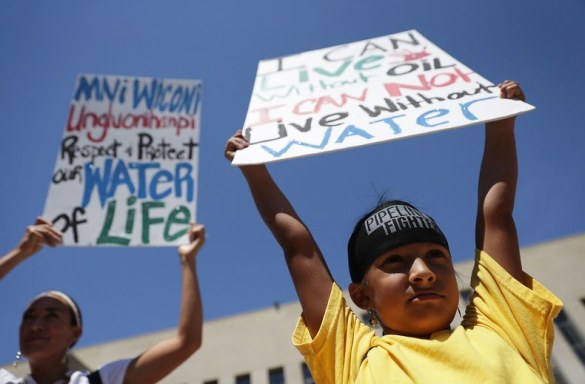
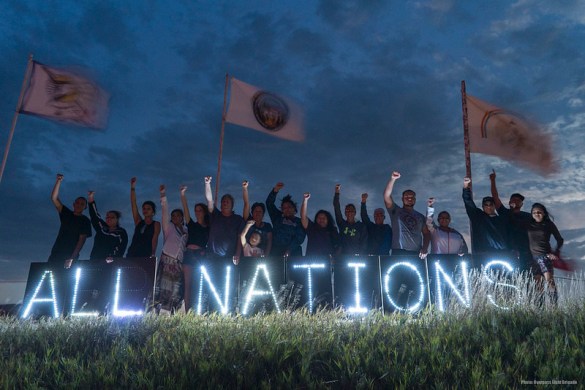
  • The Dakota Access Pipeline: Everything else in Washington seems to be pushing this issue to the back burner, which makes me mad! For more, see Hot Topic #16.
  • Crime: Trump needs to get over himself, attend his daily briefings like all other Presidents in the history of our country have done, and stop using alternative facts and/or fake news. The inflated crime statistics, the 45-year-high murder rate – Nope. Try again. FALSE.
  • Relations with Russia: Once again, John Oliver is fucking brilliant. Check out his most recent episode of Last Week Tonight: Putin.
  • The Media: I lead you to John Oliver again: Trump vs. Truth. Also, the most recent frightening development – Yesterday, when several news organizations (CNN, The New York Times, The Los Angeles Times, Politico, BuzzFeed, The Guardian, and the BBC) were outright BANNED from the White House press briefing? Yep, that’s absolutely terrifying. In that same article, Trump was quoted as saying that “… much of the press represents ‘the enemy of the people.'”
  • Planned Parenthood: Voting to de-fund Planned Parenthood because they perform abortions? Oh, my God. Give me a break! ZERO federal funds are used for abortions – Not one penny. Here’s the simplest explanation I could find: How Federal Funding Works at Planned Parenthood. For more, see Hot Topic #12.

Well, readers, this is all I can muster to write, for now. Thanks for reading / listening. You all mean the world to me.


Until the next headline, Laura Beth 🙂

Hot Topic #17: The Affordable Care Act

There’s been a lot of chatter online recently regarding the Affordable Care Act (ACA).

I started writing this post about two weeks before Election Day. It’s only been 17 days since that day, but the whole world has now changed.

Like many people, I was stunned at the outcome. I know that the ACA is now under a stronger microscope now, more than ever.


Full disclosure: I work for a health system in Virginia. For the last four years, I have been immersed in the world of healthcare and the insurance companies. My department helps negotiate the contracts between the health insurance companies, and our health system.

As with all of my blog posts that involve research and sources, I try my best to be well-read and as well-informed as possible.


The official name for the ACA is the Patient Protection and Affordable Care Act (PPACA). It was signed into law by President Obama on March 23, 2010.

There were three main goals with enacting the PPACA:

  1. Increase health insurance quality and affordability
  2. Lower the uninsured rate by expanding insurance coverage
  3. Reduce the costs of healthcare

The law requires health insurance companies to accept all applicants, cover a specific list of conditions, and charge the same rates regardless of pre-existing conditions or sex.


On a positive note, the law has appeared to help reduce the number of Americans without health insurance.

According to the Centers for Disease Control and Prevention (CDC), the percentage of people without health insurance was 16.0 percent in 2010.

Between the period of January-June 2016, the percentage of people without health insurance was down to 8.9 percent.

That breaks down to a 7.1 percent reduction. Dividing that by six years, it’s been roughly a 1.18 percent reduction since the law was enacted.


In March 2016, the Congressional Budget Office (CBO) reported that 23 million people now have insurance due to the law.

Those 23 million people break down as follows:

  • 12 million people covered by the exchanges (10 million of those received subsidies to help pay for their insurance).
  • 11 million made eligible for Medicaid.

I’m going to stop for a second and try to answer some questions that may have arisen with what you just read.

What are the exchanges?

  • They are regulated marketplaces, mostly online, where individuals and small businesses can purchase private insurance plans.
  • They are in all 50 states.
  • They are administered by either the federal or state government.

What are subsidies?

  • Subsidies are money, in the form of a refundable tax credit, made available to certain households. The U.S. has a federal poverty level (FPL), and households that have incomes that equal a certain percentage of the FPL can get help to purchase insurance on the exchanges.
  • For example, in 2014, the FPL was $11,800 for a single person, and $24,000 for a family of four people. Households with incomes between 100 percent and 400 percent of the FPL were eligible.
  • $24,000 x 133 percent (1.33) = $31,920 per year income. The maximum insurance premium that family would pay was $992 for that year. The family could also be eligible for a little over $5,000 in subsidies.

What is Medicaid?

  • Medicaid is a government program that helps provide health insurance for people with low income, such as adults, children, and people with certain disabilities.
  • One caveat of the PPACA is that Medicaid expansion was left up to the individual states. Virginia, for example, is one of the states that chose to not expand Medicaid.

It’s tough to wade through all of this information. I can see why there have been numerous challenges and criticisms of the ACA. It’s been six years since it’s been enacted. Even though I work for a health system and I work with the health insurance companies on an almost-daily basis, it’s difficult for me to try to explain all of this.

I feel extremely fortunate that my employer offers health insurance that covers almost all of my needs. The premium is taken directly out of my paycheck, and my out-of-pocket costs are relatively low. There are certain things, such as my chiropractor visits and dermatology procedures, that are not always covered, but I’m fortunate to have a good job that allows me to pay those bills. I feel at peace, knowing that if I had to go the emergency room or be admitted to the hospital any time soon, that my insurance would be able to cover me.

Because of my job, I’ve tried really hard to immerse myself in learning about the ACA and how it works, or how it’s supposed to work. By educating myself, I’m able to think and speak more intelligently about it, and try to think ahead. The world of healthcare is constantly changing, nearly every day.


I’ll leave you with a list of resources that I used while constructing this post. I hope this post was educational, informative, and helpful.

I certainly don’t know everything, but I definitely like to learn.


Until the next headline, Laura Beth 🙂

Hot Topic #16: The Fight Over The Dakota Access Pipeline

dapl-heavy

Image Credit: heavy.com

dapl-vanityfair

Image Credit: vanityfair.com

There’s been a huge fight over the Dakota Access Pipeline (DAPL).

I’ve seen a bit of chatter about it on Facebook, but I wanted to address it here.


The image below is a map of the proposed pipeline, running from North Dakota to Illinois.

Here’s the facts from Energy Transfer: DAPL Pipeline Facts

dapl-thejournal-news

Image Credit: thejournal-news.net

It’s been a mix of stop and go, for a while now.

The Standing Rock Sioux Tribe filed an injunction, but a federal judge rejected it.

Then, the U.S. Army, Department of Justice, and Department of Interior announced they would stop work – temporarily – under a lake that is considered a crucial source of water for the tribe.

Several news agencies have covered this issue, but I don’t think it’s been nearly enough!

What I can’t understand is how this issue has not received national coverage, up until recently. I’m glad that news outlets are starting to give it attention, but it’s tough to swallow that nearly four whole months went by (roughly May 10th to September 3rd) between coverage of the efforts to stop this pipeline and more protests.

Here’s a caption from the Political Junkie News Media Facebook page from September 12th:


A temporary halt on 3% of the pipeline is not a victory. Arrest warrants issued for Amy Goodman and Jill Stein is not justice. Hiring private mercenaries to combat peaceful protestors is not protecting their 1st amendment.

It’s terrorism. Don’t let this story die. #nodapl #rezpectourwater

While searching for more information on Facebook, I stumbled on the US Uncut page.

I then found this link:


That headline, alone, convinces me that this story needs to be explored, investigated, and told, not ignored.

dapl-overpasslightbrigade

Image Credit: overpasslightbrigade.org

People Over Pipelines.

#NoDAPL


Until the next headline, Laura Beth 🙂