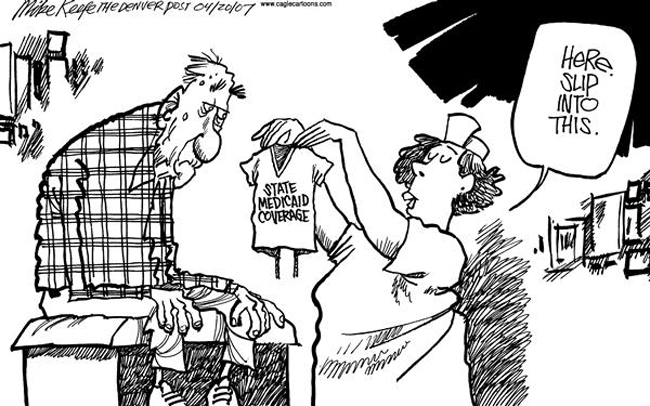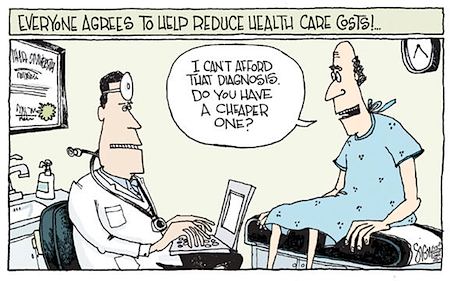
Commentary #57: “Trump has no idea how much health insurance costs”

health-care-costs-2

Image Credit: thenesthome.net

Even though this article was published well over two months ago, it sparked a fire in me.

Here’s the link to the original post:


Reading this article, I was appalled. Granted, a lot of things about our current President are appalling. But, I digress.

How much do you pay every month, or every pay period, for your health insurance? (This is a rhetorical question, of course.)

I think we all WISH it was as little as $12 or $15.

Sadly, it’s not.


Al and I both are incredibly fortunate to have decent/good employer-sponsored health insurance. This means that health insurance is one of the benefits at the companies where we work. But, even though our employers offer it to us, it’s far from a simple process.

At my work, we can choose from several different options. Depending on what we pick, that factors into how much money we pay. For me, I’ve elected to pay for my plan out of every paycheck, and it’s automatically deducted.

Toward the end of the year, the two of us will sit down and re-evaluate the plans that both our companies offer, side-by-side. We will figure out if we will continue to pay for our own individual plans, like we have been, or if one of us will go on the other’s insurance plan since we’re now married. There are advantages and disadvantages to both of these strategies. So far, it’s worked out that we’ve paid for two individual plans. We will also have other decisions to make when we plan to grow our family. The short answer: Spouses and children are a tad bit expensive (to put it lightly).

I won’t say how much we pay, but it’s much more than $12 or $15 a month. That’s a pipe dream.


I thought this was an interesting link:

I don’t swear by these numbers, but it certainly gives me a good indication at how much prices have skyrocketed!

And, it’s a bit mind-boggling to think/know that every singe state in our country shows different prices.


Recently, I’ve seen multiple arguments / pleas / thoughts about the U.S. needing to convert to “universal health care” or go to a “single-payer system.”

So, what does this mean?

Canada, Australia, Taiwan, and several countries in Europe, offer their citizens “universal health care,” which basically means that health care is provided to everyone, no questions asked. Also, prices are typically lower / more affordable.

That conglomeration of ideas is certainly enticing to many. However, there are trade-offs.

For the most part, many citizens of these countries pay higher taxes.

Non-emergency approved surgery have significantly longer wait times. Sometimes, patients are waiting for at least six months for some surgeries, if not longer.

“Single-payer health care” is sometimes referred to as “Medicare for all.”

The way I interpret it, is that all citizens of a country pay into one pool. That pool of money is used exclusively for all health care costs. In this instance, health care is considered a right, not a privilege.

As some of the sources I’ve consulted point out, the U.S. already has an established single payer system, meaning Medicare and Medicaid. However, only certain people in the U.S. qualify for these programs, such as people over the age of 65, young children, the blind, and people with certain disabilities. Even so, there are strict rules in place. For example, not all states have expanded Medicaid – Virginia is one of those states. If you make too much money, you don’t qualify. And on and on. It’s immensely confusing, and frustrating.

Here’s a list of resources / articles that I found helpful:


In short, health care in the U.S. has become increasingly complicated, convoluted, and expensive. I realize that the Affordable Care Act (ACA) fixed some things, but it also created other problems. A lot of the big health insurance companies, along with the pharmaceutical companies, are purely driven by greed. They only care about the bottom line, not about the patients that are trying to get health care and medicine that they need.

I certainly don’t have the right answer.

In my research, I’m all for making health care more affordable. Every American should have equal access to health care at all times. But, making that happen is a tough challenge. In my view, if our country can revamp Medicare and Medicaid and make those existing programs into universal health care for America, that would be a step in the right direction.


Until the next headline, Laura Beth πŸ™‚

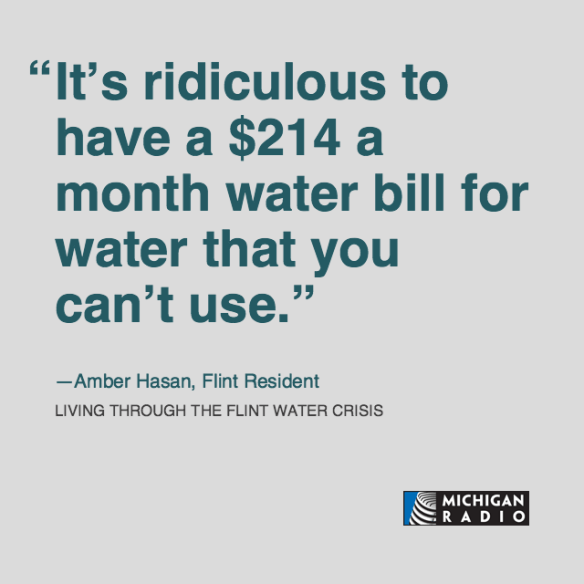
Hot Topic #19: The Water Crisis in Flint, and Others

quote-its-ridiculous-to-have-a

Image Credit: Michigan Radio

This particular issue has been running through my veins for a good while now – No pun intended.

The purpose of this post is to review the events of what’s happened with the water in Flint, Michigan. In addition, I want to highlight other cities that have or have had their own water crises.


In my humble opinion, this is simply unacceptable. Everyone needs water to survive!

According to the U.S. Environmental Protection Agency (EPA), a person can live about a month without food. However, one can only survive about a week without water.

Lack of clean, safe water leads to further illness and disease, and ultimately, death.


Flint, Michigan

One of the most recently updated articles about the crisis in Flint comes from CNN:

In a nutshell, the city officially switched water sources in 2014. At that time, Flint’s water supply fund was $9 million in the hole. Flint has gotten its water from Lake Huron since 1967. But, nearly three years ago, the source was switched to the Flint River while a new pipeline was under construction.

The Flint River was not being treated with an anti-corrosive agent, which violates federal law. Because this agent was not added, when the supply was switched over, lead from old pipes started to contaminate the water.

Lead exposure is known to cause adverse health effects, particularly in children and pregnant women. There are medicines that reduce the amount of lead in the blood, but further treatments have not been developed.

Since then, it’s been disaster after disaster. Finger-pointing back and forth, multiple lawsuits, and tons of bureaucratic red tape. All the while, the residents have been holding the bag – All they want is to be able to use their tap water again.

Among other things, tests have come back positive for horrifying things over the last few years, such as Legionnaire’s disease, total coliform bacteria, disinfectant byproducts, and bacteria buildup. Even Flint’s General Motors plant stopped using the city water because high levels of chlorine were corroding engine parts.

Flint has been in the spotlight for another reason – About 40 percent of its residents are African-American. There have been multiple claims / allegations that race has been a factor in the crisis, as well.

Here’s some more information. The timelines were immensely eye-opening.


Other Cities in the U.S.

After the Flint crisis broke loose, other cities in the U.S. started reporting elevated levels of lead in their water supplies.

A simple Google search of “water crisis in America” immediately hits upon an article, dated March 2016, from CNBC, titled, “America’s water crisis goes beyond Flint, Michigan.”

Another startling article, titled, “America Is Suffering From A Very Real Water Crisis That Few Are Acknowledging,” is more recent. This was published just a few months ago, in January. It cites several sources, but most striking is one report from Reuters that states shocking statistics. There are 3,000 localities in the U.S. alone that have lead levels at least double the amount in Flint.

That’s just insane.

Like Flint, many of these communities have what’s referred to as “legacy lead,” meaning that most are former industrial hubs that have crumbling paint, old plumbing, and industrial waste.

However, many of these localities have not been in the national spotlight. Most of these areas have had to fight the poison on their own.

With that said, there are multiple problems here. There is data showing contamination, but funding has not been increased or allocated to fix the plumbing, pipes, or water supplies. While recent focus has been on lead, there are water supplies all over this country that are tainted with numerous hazardous metals and elements (mercury, arsenic, chlorine, etc.), bacteria, and other things that are far from safe.


Around the World

It’s no secret that other cities and countries on our planet don’t have regular access to clean, safe drinking water.

A quick Google search lists numbers of at least 1.1 billion people on our planet that have scarce water.

Here’s several links that illustrate the worldwide water shortage:


What Can We Do?

At this point, you may be feeling helpless, or confused, or sad. So, what can we do?

  • There are multiple charities that are dedicated to providing safe, clean water to water-scarce areas.
  • Educating others about these issues.
  • Spreading awareness.
  • Harvesting rainwater.
  • Researching and advocating new technologies.
  • Decreasing the effects of climate change.
  • Pursuing cleaner means of energy.
  • Consuming products that use less water.

Source: Conserve Energy Future

We may not be able to change the world right now, but educating others goes a long way!


Until the next headline, Laura Beth πŸ™‚

Getting Personal #61: My Skin & Makeup Routines (Part 2)

makeup

Image Credit: The Odyssey Online

As promised, here’s Part 2 of my skin and makeup routines!

If you missed Part 1, here’s the link to the post:

Ready?

Here we go!


Makeup

Like I mentioned last week, my makeup routine is pretty simple. I’ve tried both foundation and powder over several years, and I’ve finally decided that I don’t want to use either one!

Here’s my current makeup routine, in four easy steps:

  1. Blush
  2. Eyeshadow
  3. Eyeliner
  4. Mascara

I remember getting introduced to Mary Kay products back when I was in middle school. Between my mom using their skin care products (She still does now!), and several friends having free facials and makeovers at sleepovers, I loved their makeup back then.

Think of a early teenage Laura Beth experimenting with shades like Cotton Candy, Lime Green, Icy Blue, and more …

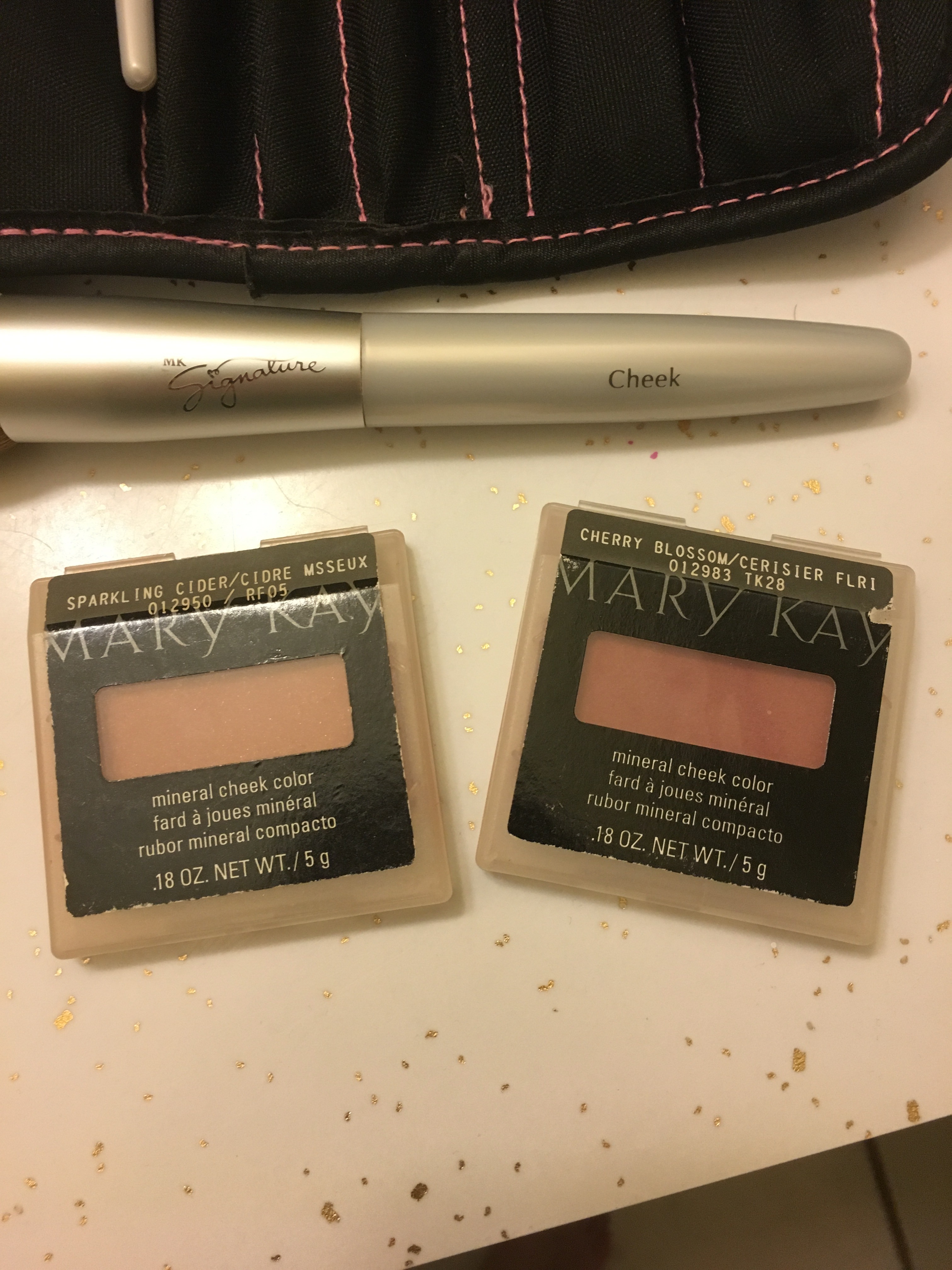
Years ago, a friend started selling Mary Kay to help pay her way through college. I bought several things at that launch party that I’ve loved since:

I still like a lot of what Mary Kay makes, but I don’t have a regular rep that I buy from right now. Most makeup that I’ve bought in the last year or so has actually come from the Dollar Tree, Walmart, Target, or your average drugstore (Walgreens, CVS/pharmacy, etc.)

Three Mary Kay items that I currently use actually came from a local Goodwill store:


So, back to my current four-step routine. This is what I do, and use, on an almost daily basis:

  1. Blush – Either Sparkling Cider or Cherry Blossom. With my skin tone, I can be liberal with Sparkling Cider, but cautious with Cherry Blossom. Too much of that, and I turn into a porcelain doll!
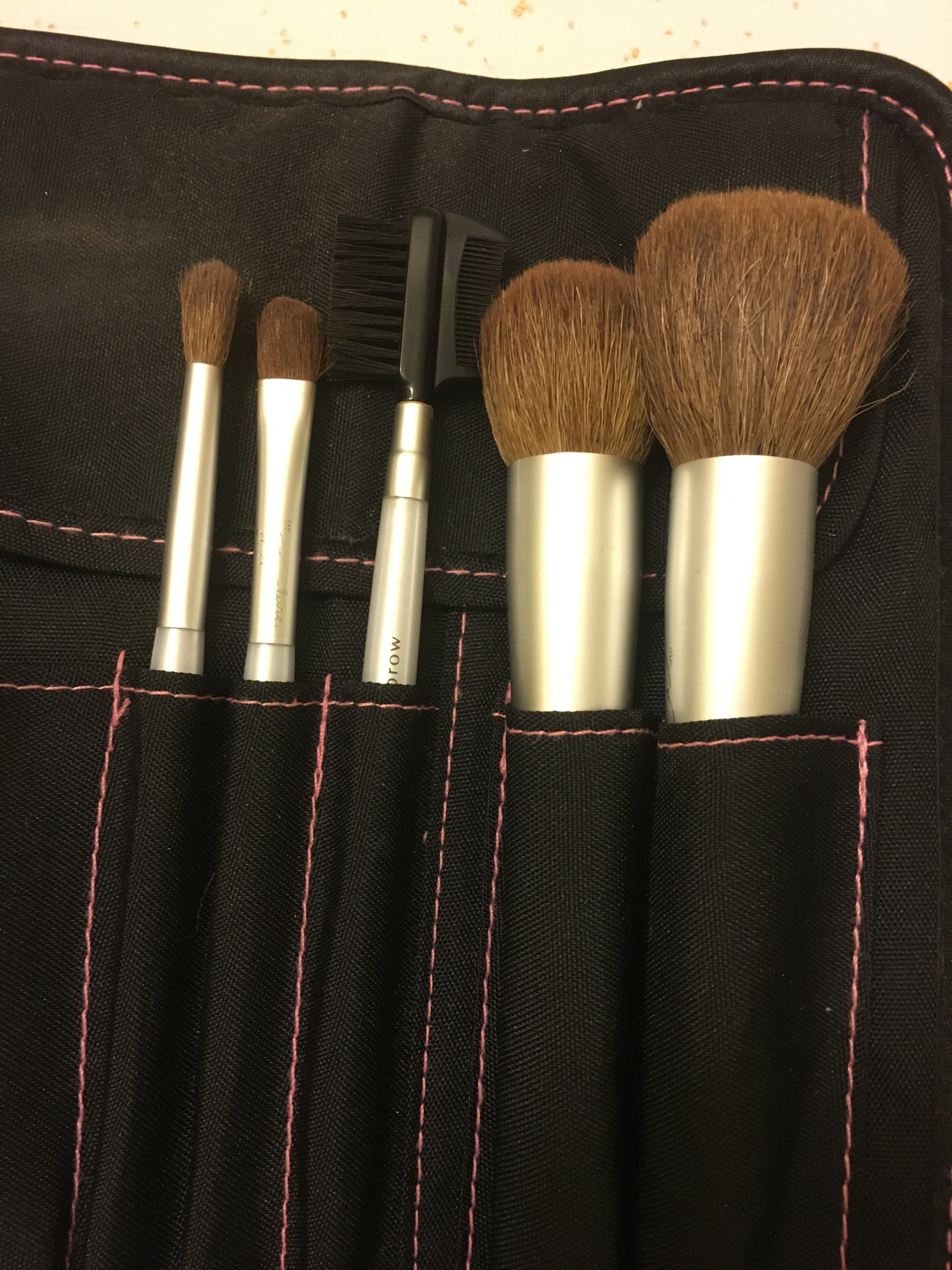
  2. Eyeshadow – I use the Eye Definer brush for either Truffle or Chocolate Kiss, on my eyelids. I use the Eye Crease brush for Spun Silk, on the skin between my lids and my brows.
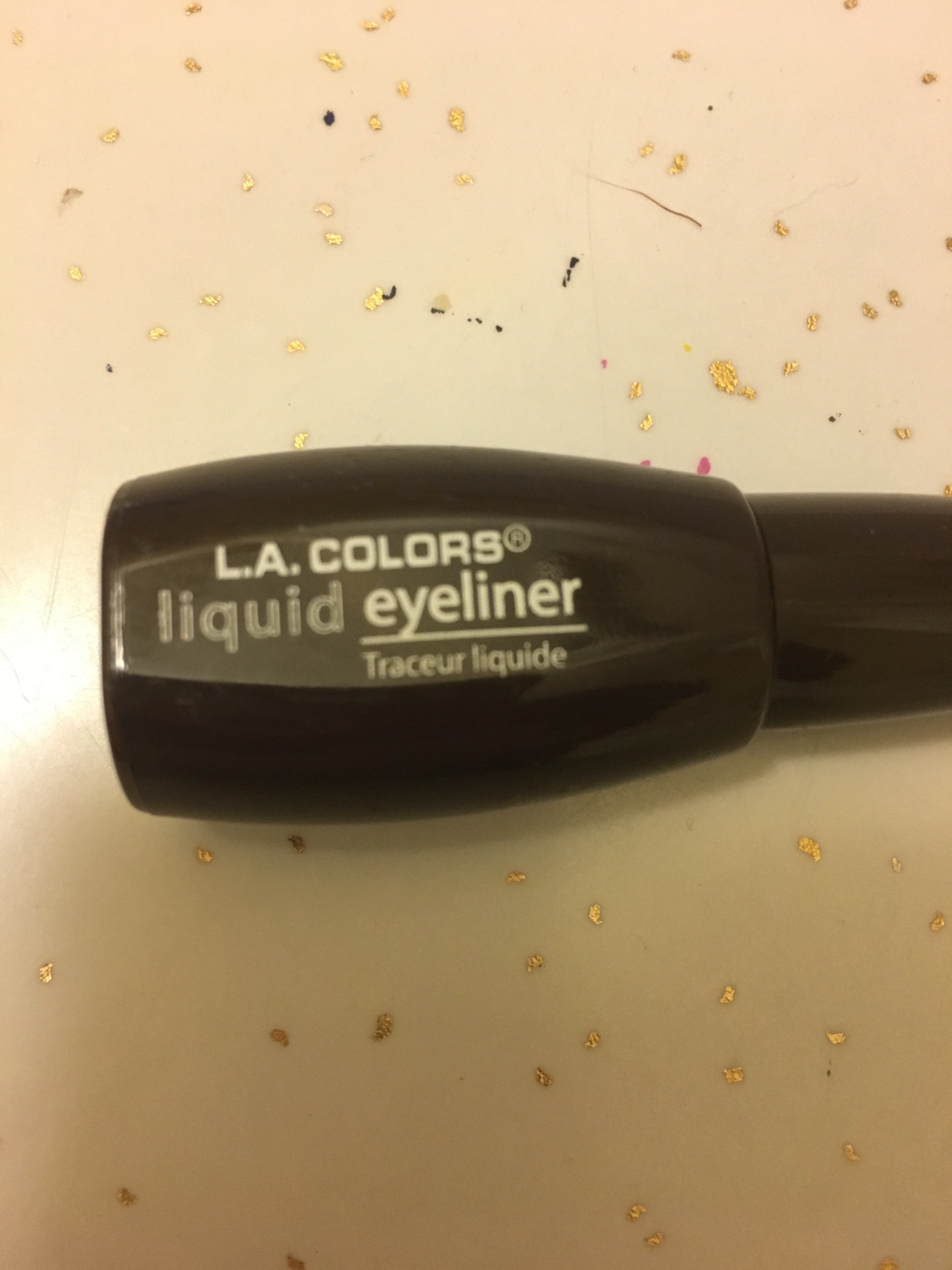
  3. Eyeliner – I normally like/prefer a crayon or twist-up black eyeliner, but recently I’ve been loving my L.A. Colors liquid eyeliner. This came from my local Dollar Tree!
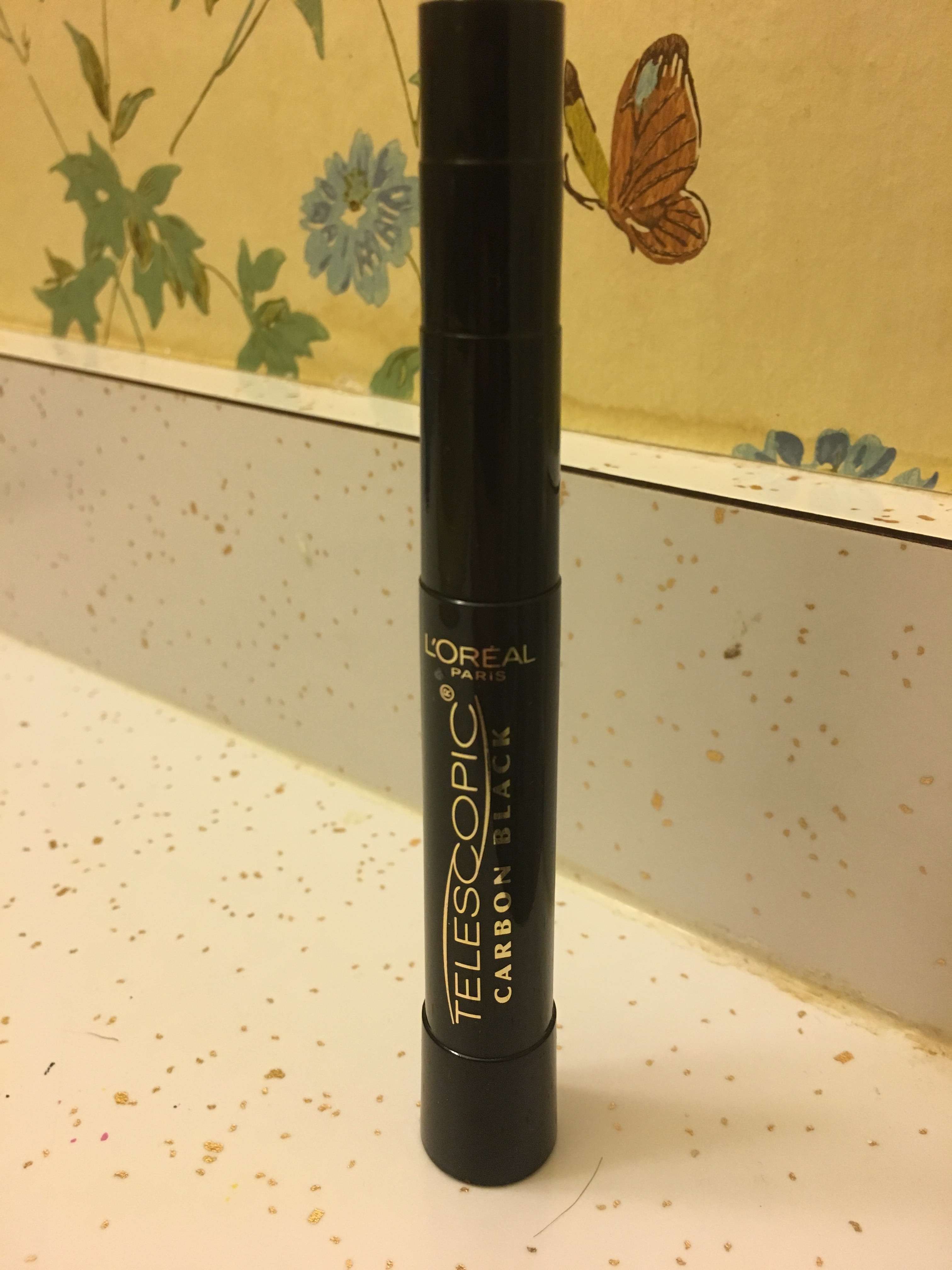
  4. Mascara – I used a few different types of mascara from Mary Kay until it ran out. Then, in 2015, while planning my wedding, I found L’Oreal Paris Telescopic Original Mascara from Walmart.com. I loved the look so much on my wedding day, that I bought a second tube!

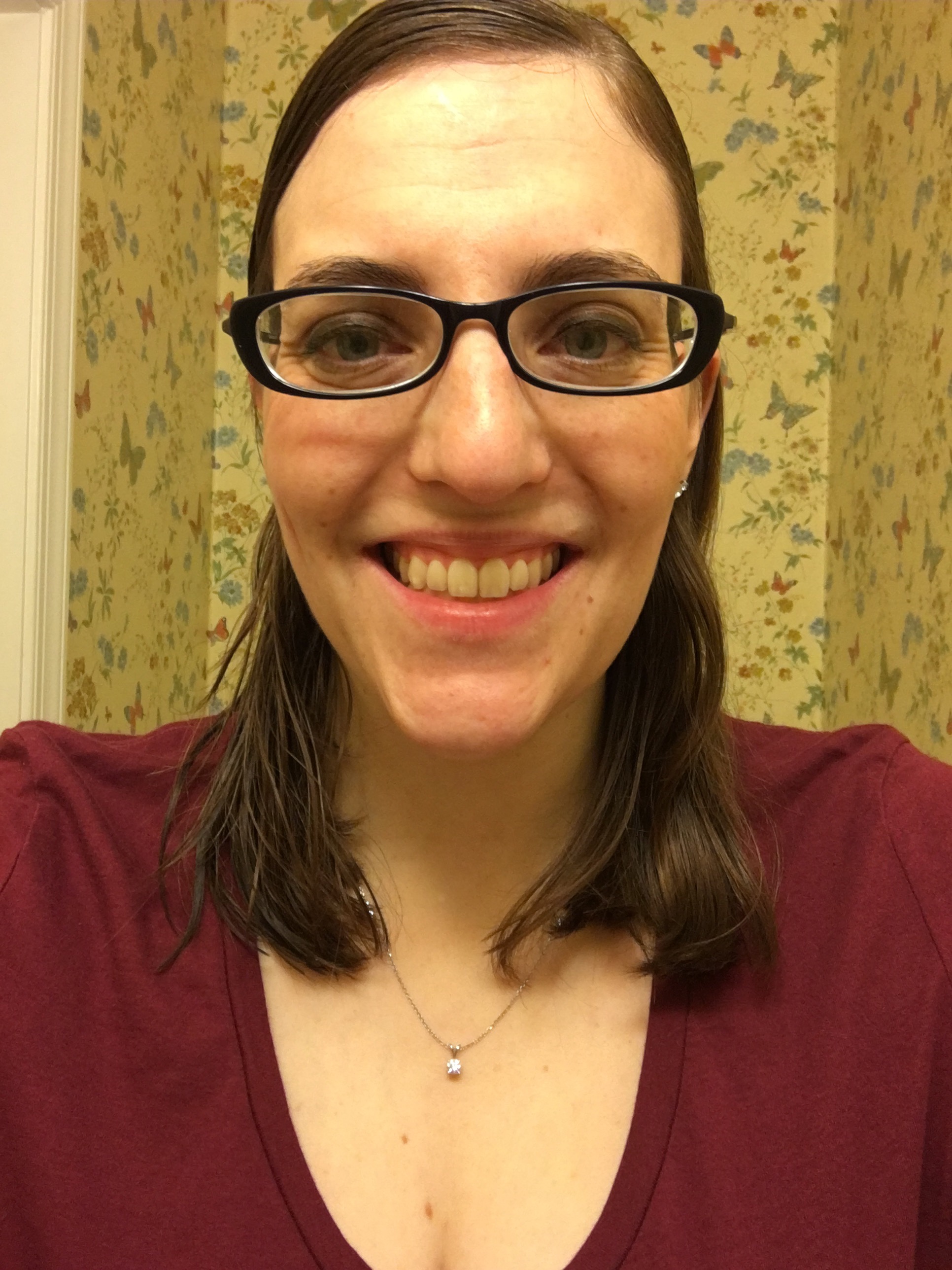
This morning – Fresh face, no makeup.

Just ten minutes later, all four steps complete.


I definitely love my Mary Kay brushes, don’t get me wrong!

But, I recently found something amazing:

Wizard Wands!!

I ordered these from Storybook Cosmetics a while back, and they are awesome!


Makeup Tips

  • Pay attention to your eye color.
    • I have hazel/green eyes, so I naturally lean toward more brown/beige/suede tones for my eyeshadow.
    • For eyeliner and mascara, I tend to go back and forth between black and dark brown. Both colors work well for me.
  • Always moisturize your face before applying makeup.
    • As mentioned in Part 1, I use Enzymion and Tea Tree Toner from LUSH Handmade Cosmetics. I’ve found that this combination, right now, works the best for my skin. I highly recommend for you to research your skin and test (and re-test) until you find something that works best for you.
    • When I wear makeup (not every day), my skin still feels hydrated and fresh all day.
  • Always take your makeup off before going to bed!
    • I cannot stress this enough – It’s so important. Your face will thank you.
    • This has never happened to me (knock on wood), but one of my friend’s wives got a terrible case of blepharitis (eyelid inflammation) the week of their wedding! It happened mainly because she wasn’t taking off her eye makeup before going to sleep. Lucky for her, she received prompt treatment and everything cleared up for their big day!
    • I currently use oil-free makeup wipes, but you can also make your own.
    • You can also use Coalface or Dark Angels from LUSH. I want to try one of these products next, primarily to cut down on the waste that wipes create.
  • If you’re interested in learning more about makeup, I definitely recommend contacting a Mary Kay representative near you. However, two other good places to learn and explore are Ulta Beauty and Sephora. If you decide to go with either of those, I suggest going into a store. I’ve found that employees at both are not only knowledgeable, but super helpful! Sephora even has the Color IQ test, where you can find out your exact skin tones (red, yellow) and the employees will help you with specific product recommendations for lips, foundation, and concealer.
  • Learn how to wash your brushes/applicators properly, and how often.
  • Make sure to read expiration dates on all of your makeup. Most companies are now required to have a jar symbol with an indicator such as 6M (six months after opening), 12M (twelve months after opening), and so on. There are different recommended dates of use for different types of makeup.

Until the next headline, Laura Beth πŸ™‚

Getting Personal #60: My Skin & Makeup Routines (Part 1)

lush-harbor-east

Image Credit: Harbor East

Many thanks to Megan over at Freckled Italian for inspiring this post!

Here’s Megan’s original post:

Ready?

Here we go!


Skin

Some of you know that I got into LUSH Handmade Cosmetics products well over a year ago, thanks to a few friends who talked it up. I wasn’t disappointed!

It helps that there’s a store in Norfolk’s MacArthur Mall. It’s an expensive investment, but the benefits have absolutely paid off in spades.

Before I found LUSH, I was using a combination of Clean & Clear products and a few things that my mom and others had recommended. I couldn’t seem to control the oil, and I had absolutely hellacious breakouts during that lovely time of the month. I was massively frustrated. I didn’t want to wear makeup. My skin is relatively sensitive, but I never, ever realized what I was using to wash and moisturize my face could be harming it.

In December 2015, I walked into LUSH for the first time. The staff were wonderful! I was immediately entranced by everything that they offered. They update their product lines regularly, and they always seem to have something new when I visit.

The idea is to use just a little bit of the product every day. Some of my LUSH stuff lasts for MONTHS, and it’s awesome. In all of 2016, I only visited the store four times to make purchases.

This is what I have used and/or sampled since Day 1:

I liked Angels on Bare Skin and Movis, but I probably won’t buy those again. Some of the smells were super strong!

I may buy Aqua Marina again, because it has calamine lotion in it. Considering I usually get eaten alive by mosquitoes in the warmer months, I’ll probably keep a small “pot” of it at home. I will probably do the same with either Dark Angels or Coalface, since both are good to use for makeup remover.

I definitely want to buy Ocean Salt again, closer to the summer months. It smells like the beach, and I felt like I was in a spa every time I used it!

I love the variety of bath bombs that LUSH offers. The baths I have taken with them – Three since we bought our house – have been calming and soothing.

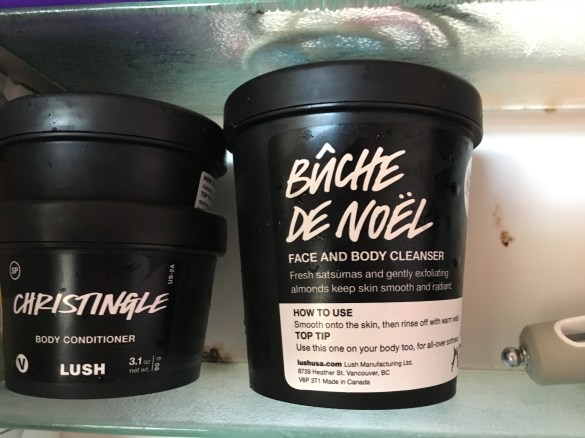
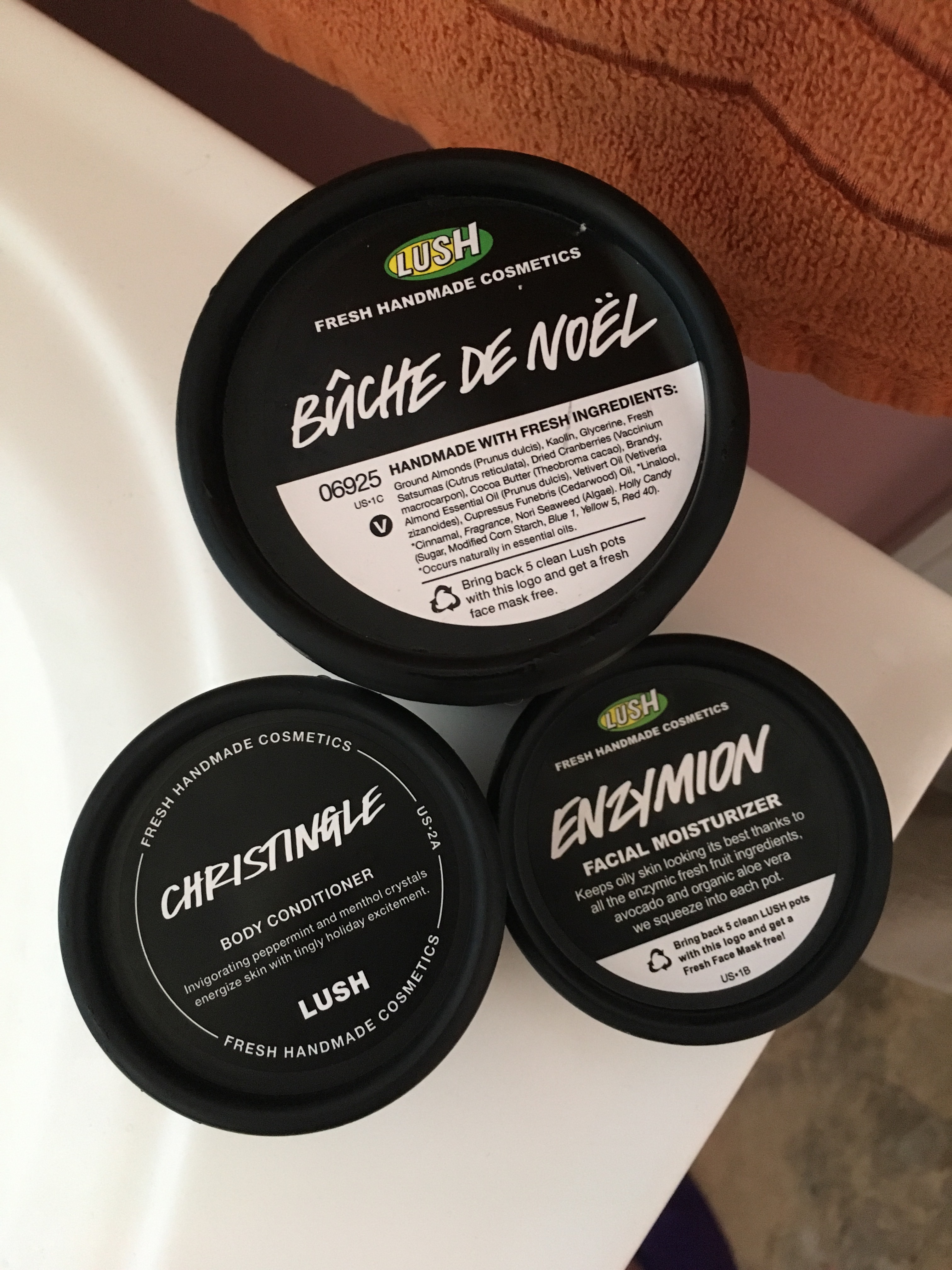
I currently have the following in my bathroom:

The one without a side label is Enzymion. The pots fit perfectly on the shelves in our mirrored cabinet.

Buche de Noel is one of my favorite products. It smells like Christmas, and it does a great job on my face and skin. I use it every day in the shower on my face (unless I just got my eyebrows waxed), and I usually scrub it all over my arms and heels. It’s really helped when the skin on my heels has been very dry and rough. It’s a seasonal item, so I try to make this last as long as possible.

Top: Buche de Noel. Bottom left: Christingle. Bottom right: Enzymion.


Christingle is a new product that I discovered on my last store visit. It smells amazing, and the cool, refreshing tingle I feel after I use it in the shower feels awesome. Like Buche de Noel, I’m trying to make it last, since I won’t be able to buy it again until later in 2017.

Enzymion and Tea Tree Water have been with me since Day 1 – I will always buy these. Enzymion is the perfect moisturizer for my skin. This has helped dramatically reduce breakouts, and my skin feels lighter and far less oily now. The Tea Tree Water is so refreshing. I spritz it on right after I apply Enzymion. In the hotter months, I like to put it in the fridge. It makes the hot and humid days bearable!

I haven’t tried Rose Jam yet. Soon!

This is just a short list of what I want to try in the future:

The other bonus – When you bring back five clean labeled “pots” after using the products, LUSH will give you a free face mask. They reuse the pots, and then recycle them later on.

I’m excited to do this for the first time soon – I had enough pots to redeem in December, but they didn’t have any face masks to give me! I’m collecting them in a box. During my next trip, I can’t wait to see what I get.


Makeup

Since Megan’s post focused on makeup, this is was my comment:

“For me, I completely skip foundation and powder – The different stuff I’ve tried over the years seems to just clog my pores and makes me itchy! I do four things on a regular basis. First, I sweep on some blush – I love Mary Kay. I switch between “Sparkling Cider” and “Cherry Rose.” Second, I do eyeshadow – Also Mary Kay. Since I have green/hazel eyes, I prefer brown/suede/beige tones (“Truffle,” “Chocolate Kiss,” and “Spun Silk.” Third, I’m loving liquid eyeliner right now – The stuff I use currently came from the Dollar Tree. Lastly, I put on mascara. I loved the Maybelline Telescoping Lashes mascara that I bought for my wedding so much, that I saved the information and bought a second tube! It probably takes 10 minutes total, but the compliments are totally worth it.”

However, since the Skin section took up such a huge chunk of this post, I’m dividing this post into two parts.

Come back this time next week to learn more about my makeup routine!


Until the next headline, Laura Beth πŸ™‚

Commentary #48: “Reasons Not To Be An Organ Donor”

organ-donation-nerdy-info

Image Credit: nerdyinfo.com

I first found this link on my good friend Megan’s amazing blog, Freckled Italian!

Here’s where I found the link:


Ready? Here we go!

Here’s the link to the original post:

For me, I didn’t even hesitate when I was asked if I wanted to be an organ donor. I said yes, absolutely.

So, I completely agree with the author’s position – There are no reasons not to be an organ donor!

Regardless, her piece was well-researched, and bit of humor, too!

For me, I greatly appreciated the statistics she included. Statistics always make articles more compelling for me.

There’s a known shortage of organs. The transplant lists are (or they feel like it, anyway) miles long. People die every single day waiting for kidneys, livers, hearts, lungs, and others. It’s so sad!

As an example: With blood donations, one pint from you can save up to three lives. With organ donation, you can potentially save many, many more. It’s an awesome concept!

organ-donation

Image Credit: UFMC Pueblo


I wanted to include some more links, in case anyone is interested in learning more:


Are you an organ donor?

Do you know someone who has received an organ?

Do you know someone on a transplant list?

Do you want to become an organ donor?


Until the next headline, Laura Beth πŸ™‚

Hot Topic #17: The Affordable Care Act

There’s been a lot of chatter online recently regarding the Affordable Care Act (ACA).

I started writing this post about two weeks before Election Day. It’s only been 17 days since that day, but the whole world has now changed.

Like many people, I was stunned at the outcome. I know that the ACA is now under a stronger microscope now, more than ever.


Full disclosure: I work for a health system in Virginia. For the last four years, I have been immersed in the world of healthcare and the insurance companies. My department helps negotiate the contracts between the health insurance companies, and our health system.

As with all of my blog posts that involve research and sources, I try my best to be well-read and as well-informed as possible.


The official name for the ACA is the Patient Protection and Affordable Care Act (PPACA). It was signed into law by President Obama on March 23, 2010.

There were three main goals with enacting the PPACA:

  1. Increase health insurance quality and affordability
  2. Lower the uninsured rate by expanding insurance coverage
  3. Reduce the costs of healthcare

The law requires health insurance companies to accept all applicants, cover a specific list of conditions, and charge the same rates regardless of pre-existing conditions or sex.


On a positive note, the law has appeared to help reduce the number of Americans without health insurance.

According to the Centers for Disease Control and Prevention (CDC), the percentage of people without health insurance was 16.0 percent in 2010.

Between the period of January-June 2016, the percentage of people without health insurance was down to 8.9 percent.

That breaks down to a 7.1 percent reduction. Dividing that by six years, it’s been roughly a 1.18 percent reduction since the law was enacted.


In March 2016, the Congressional Budget Office (CBO) reported that 23 million people now have insurance due to the law.

Those 23 million people break down as follows:

  • 12 million people covered by the exchanges (10 million of those received subsidies to help pay for their insurance).
  • 11 million made eligible for Medicaid.

I’m going to stop for a second and try to answer some questions that may have arisen with what you just read.

What are the exchanges?

  • They are regulated marketplaces, mostly online, where individuals and small businesses can purchase private insurance plans.
  • They are in all 50 states.
  • They are administered by either the federal or state government.

What are subsidies?

  • Subsidies are money, in the form of a refundable tax credit, made available to certain households. The U.S. has a federal poverty level (FPL), and households that have incomes that equal a certain percentage of the FPL can get help to purchase insurance on the exchanges.
  • For example, in 2014, the FPL was $11,800 for a single person, and $24,000 for a family of four people. Households with incomes between 100 percent and 400 percent of the FPL were eligible.
  • $24,000 x 133 percent (1.33) = $31,920 per year income. The maximum insurance premium that family would pay was $992 for that year. The family could also be eligible for a little over $5,000 in subsidies.

What is Medicaid?

  • Medicaid is a government program that helps provide health insurance for people with low income, such as adults, children, and people with certain disabilities.
  • One caveat of the PPACA is that Medicaid expansion was left up to the individual states. Virginia, for example, is one of the states that chose to not expand Medicaid.

It’s tough to wade through all of this information. I can see why there have been numerous challenges and criticisms of the ACA. It’s been six years since it’s been enacted. Even though I work for a health system and I work with the health insurance companies on an almost-daily basis, it’s difficult for me to try to explain all of this.

I feel extremely fortunate that my employer offers health insurance that covers almost all of my needs. The premium is taken directly out of my paycheck, and my out-of-pocket costs are relatively low. There are certain things, such as my chiropractor visits and dermatology procedures, that are not always covered, but I’m fortunate to have a good job that allows me to pay those bills. I feel at peace, knowing that if I had to go the emergency room or be admitted to the hospital any time soon, that my insurance would be able to cover me.

Because of my job, I’ve tried really hard to immerse myself in learning about the ACA and how it works, or how it’s supposed to work. By educating myself, I’m able to think and speak more intelligently about it, and try to think ahead. The world of healthcare is constantly changing, nearly every day.


I’ll leave you with a list of resources that I used while constructing this post. I hope this post was educational, informative, and helpful.

I certainly don’t know everything, but I definitely like to learn.


Until the next headline, Laura Beth πŸ™‚

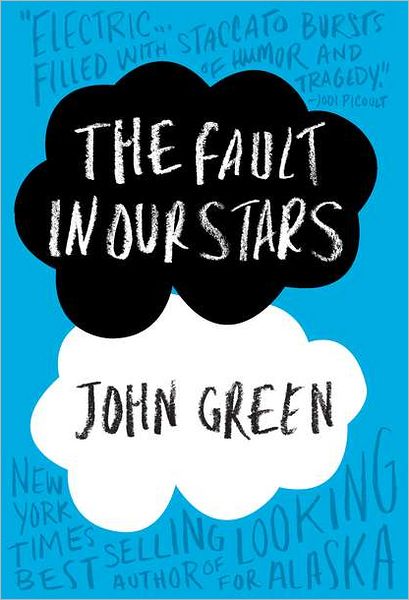
Book Review #9: “The Fault In Our Stars”

The_Fault_in_Our_Stars

Image Credit: Wikipedia

β€œSometimes, you read a book and it fills you with this weird evangelical zeal, and you become convinced that the shattered world will never be put back together unless and until all living humans read the book.”
― John Green, The Fault in Our Stars


Oh my goodness. This book.

I fell in love with John GreenΒ and his books since I read Looking for Alaska,Β as part of my Young Adult Literature course, during my very last semester at Longwood.

It’s interesting how I finally got around to reading this book. Originally, I heard about the book around the same time that the movie based on the book hit theaters. I’m one of those people who prefers to read the books before seeing the movies based on the books.

Believe me, I read the book first, it just took me a while.

The book was first published in January 2012.

The movie was released in June 2014.

I bought a copy of the book, well-loved from a local book shop (Book Owl in Portsmouth, Virginia) before my wedding in November 2015.

I took it with me on our honeymoon, but didn’t touch it.

I finally put my hands on it toward the end of December, and I finally finished it one unseasonably warm and sunny Sunday, while watching Al fly his dji Phantom quadcopter around Portsmouth City Park.


Reaching the end of Green’s books, I’ve always gotten a new perspective. It’s hard to explain how his writing affects me, but every book has left an impression on me. I hope to own all of his books someday.

I wasn’t so sure about The Fault in Our Stars (TFIOS), at least at first. The hype over the movie left me a bit empty, slightly depressed. I knew it was a very sad subject. Many of my friends who had the read the book and seen the movie had said it was a definite tear-jerker. It was romantic and tragic.

I wasn’t sure if I would even like this book. And that broke my heart a bit, knowing how much Green’s books have impacted me for the last five years.


But, I forged ahead, and dove in anyway.

I came out of this book with a renewed appreciation for life.

Surprisingly, I didn’t shed a single tear. There were many times where tears welled up, but I also laughed. A lot!

Green’s writing immediately takes hold of you, grabs your shirt, and pulls you next to the characters and keeps you in their world. The entire time. It’s absolutely magical.

Green writes books that make you want to stay up all night long like you did when you were a kid, under your fort of sheets and blankets in bed, reading by flashlight.


My only complaint is the ending was very abrupt, and unexpected. It’s jarring. For me, it felt like I had decelerated from 60 miles per hour down to 0 within a few seconds.

I actually flipped to the next page, in complete disbelief that the book had ended.

But, regardless, it was a beautiful ending.

It may be a book designed for “young adults,” but it certainly renewed my 27-year-old spirit.

I think everyone should read this book.

4 1/2 out of 5 stars.


Until the next headline, Laura Beth πŸ™‚

Commentary #13: “20 Ways Being Left-Handed Impacts Your Health”

Image Credit: wefollowpics.com

Image Credit: wefollowpics.com

“There are so many artists that are dyslexic or learning disabled, it’s just phenomenal. There’s also an unbelievably high proportion of artists who are left-handed, and a high correlation between left-handedness and learning disabilities.” ~Chuck Close


In one of my more recent Commentary posts, I mentioned how I peruse CNN almost every day. Well, I stumbled upon another nugget for you!

I give you: 20 Ways Being Left-Handed Impacts Your Health

Some of you may not know that I’m left-handed. And I’m damn proud of it!

Here’s my take on the 20 things. Enjoy!


It’s not just genetics

For years, I thought it was genetic and/or hereditary. My dad is left-handed, and I have his eyes and his hair. A few other family members, on my dad’s side, are left-handed. So that’s where my thinking laid, for a long time. And apparently, left-handedness does tend to run in families!

It’s linked to stress in pregnancy

Oh dear. This is gonna be fun in a few years!

In all seriousness though, reading the summaries of the studies in the article was interesting, and a little frightening. I was diagnosed with General Anxiety Disorder (GAD) earlier this year. I see a lot of yoga, coloring, reading, and writing when I get pregnant!

It’s more common in twins

This was interesting. I am not a twin, but my mom’s mom had twins that died at birth. When I first met Al, I quickly learned that twins are far more common in his family – His dad has an older brother and sister who are fraternal twins. In addition, there is a line of twins on his dad’s side, but there’s a twist: They historically skip every other generation. Since it occurred in his dad’s generation, and then skipped Al’s generation, it’s thought that I may have them one day. It was so weird to hear that though – I always had this notion of having twins, even as a young child. So strange! But, only time will tell πŸ™‚

It doesn’t make you “right-brained”

Huh. This was a doozy. The study of the brain – The left brain and right brain – has fascinated me for several years. We all use the entirety of our brains, all for different functions, but seeing the percentages in the article raised my eyebrows.

It may cause you to think differently

I had to read this section twice, but I understood it. I tend to be drawn toward things on my left side. I’m not sure how “good” those things are. I think of it in a scientific sense: Since I am left-handed, it makes sense that I would naturally be drawn to or pay more attention to things on my left, rather than my right.

It can affect school performance

I knew it!! Just in a different way, haha. My biggest struggle throughout my schooling has been math. However, the inference to mild learning disabilities is spot-on, for me. I was born at 25 weeks. I had massive early intervention, with all sorts of therapy – Speech, physical, occupational. You name it, I was in it. Also, I was essentially held back for a year in elementary school, and it was exactly what my brain and body needed. I believe it contributed to my maturity and early connection with adults.

It’s linked to a risk of mental health problems

Interesting. As I mentioned earlier, I was recently diagnosed with General Anxiety Disorder (GAD). I wish that this article had links to the cited studies. But, I agree with the links to ADHD and some mood disorders – Those fit my history.

It does offer an advantage in sports

For me, sports are unique. I throw with my left. But in terms of stances (batting, putting, etc.) or kicking, I stand to the right, or I use my right foot. But the article inferred something that makes perfect sense – When facing a left-hander, left-handers have an advantage, because it’s basically mirror imagery!

It may make for better fighters

Ha! Laura Beth, world champion boxer. Yeah, right! Although, I do like the idea of developing a strong left hook.

It doesn’t make you more creative

Interesting. I like the idea of “divergent thinking.” But, I also agree with examining the overall creative achievements of a person. Some people, no matter what hand they use, are just incredibly gifted and talented.

It doesn’t mean you’re artsy

Makes sense. Al is far more “artsier” that me, and he’s right-handed. And by “artsier,” I mean that he studied graphic design and animation. He’s a far better photographer and videographer. He has that eye for detail. He’s a whiz with Photoshop and InDesign.

On the other hand (no pun intended), we agree that I’m a stronger writer and editor. I grew up playing and performing music (piano, viola, and some voice), and I studied the visual arts in high school, enjoying pastels and a little bit of drawing.

It’s linked to a higher risk of breast cancer

Hmmmmm. According to the article, the highest risk is after menopause. Still – I’m gonna keep an eye on things.

It doesn’t affect your general health

With the exception of inflammatory bowel disease, of course. Yuck. Lucky for me, that hasn’t happened, so far!

It’s linked to some sleep problems

So, kicking my mom when I had a bad dream and slept in her bed wasn’t on purpose! It’s scientifically proven, Mom!

It doesn’t impact longevity

“Zero effect on lifespan,” says the author. Whew!

It may up the risk of PTSD

Interesting. I’m definitely not a horror movie fan, at all. I can’t watch certain shows anymore, like ones that I used to love years ago (CSI, Criminal Minds, etc.) I’m a visual person, so I’m easily scared if I can picture a graphic image. Even hearing someone recount a scene from a movie or TV show can make me jump or shiver. It’s strange, but true.

It doesn’t make you a bigger drinker

Left-handedness has nothing to do with alcohol consumption. I’m not a big drinker, by any means. I enjoy a Corona with lime on occasion and there are days where I need a glass of wine (or two), but I’m not going nuts every single night or hitting up the bars or clubs every weekend. Not me!

It might mean you earn less money

I was initially taken aback by this observation, but after re-reading it, it’s interesting to ponder. The research cited shows a significant difference in the gap between left-handed and right-handed women workers. Hmmmmm.

Overall, handedness doesn’t really matter

I agree with the statement that ” … the differences between righties and lefties are really rather subtle, and of much greater scientific interest than any kind of practical use …” Reading all these summaries of research and studies has certainly peaked my curiosity. I was also curious to see that research is planned for more right-handers and their brains, since so much focus has been placed on lefties and those who are mixed-handed or ambidextrous.


Until the next headline, Laura Beth πŸ™‚

Hot Topic #11: Big Pharma – A Look Into Martin Shkreli, The Gobs Of Money, And More

Disclaimer: This post contains strong language.


Earlier this week, the Internet basically blew up because of this guy:

Image Credit: NBC News via Paul Taggart / Bloomberg via Getty Images file

Image Credit: NBC News via Paul Taggart / Bloomberg via Getty Images file

The media was all over it. Outrage was almost instantaneous. Martin Shkreli has been called almost every name in the book: “Public Enemy No. 1,” “the most hated man in America,” “a spoiled brat” by none other than Donald Trump, and more. The Daily Beast blatantly called him an asshole in their main headline, which was my exact impression of this shitty scumbag and fucking bottom feeder when the news first broke.

Shkreli’s decision to raise the price of Daraprim, used to treat an infection caused by a parasite, from a sensible $13.50 per pill to over $750 per dose, was jaw-dropping, among other things.

He soon back-pedaled, but the damage was already done:


It’s bad enough when your one decision sparks worldwide outrage, but I think it’s worse when your supposed colleagues in your own industry and supporting industries turn their backs on you. However, this piece of shitty scum totally deserves it. I’m applauding those in the bio tech industry and PhRMA for standing up and saying, “Whoa, hang on a second, this is not acceptable.” Read more from The Washington Post.

With that said, however, my applause is limited and short-lived. These industries are fucking money hoarders!

In The Daily Beast article, a reporter confronted Shkreli about the low cost of producing Daraprim – Roughly one dollar per pill.

Shkreli’s response to her?

” … Shkreli claimed that the price hike was necessary for Turing Pharmaceuticals to increase revenue, and that some of the profits would be funneled into research and development costs for a Daraprim alternative …”

That?

That’s PURE FUCKING GREED.


However, as The Washington Post article said, Shkreli is certainly not the first drug company executive, or drug company, to drastically raise prices.

Shkreli’s been in the news before – When he was the CEO of Retrophin, the company acquired Thiola, a drug used to treat an incurable kidney disease, with plans to raise its price over 20 times. The Retrophin board fired Shkreli and sued him for $65 million, accusing him of misusing company funds.

Here’s a few examples of those costs:

And, as I learned from researching for this post, the Food and Drug Administration (FDA) apparently can’t do a damn thing about drug prices. They have no “legal authority to investigate or control the prices charged for marketed drugs,” according to a response on the FDA’s frequently asked questions section of their website.

Reading that statement basically knocked me over, initially.

According to an article from The Atlantic, Americans were reminded this week that the U.S. is the only fucking country in the FUCKING WORLD “where drug companies set their own prices for life-saving medications.”

Cue eye roll, heavy sigh, and head-shaking.


But, wait, hold on to your hats folks, there’s actually SOME GOOD NEWS!

Before this, and now even more so because of the spotlight on and scrutiny of Shkreli, people are actually paying attention, and giving a fuck!

All right, so maybe that first set of sentences were slightly sarcastic …

For me, I’ll believe all of this when I see it.

Meaning, I’ll believe it when Congress takes action.

Right now, the only thing that all of this proves to me is Big Pharma is king, and no one can reach his throne to take away his crown.

As someone who has typically chosen Democrat in the nine years that I have been able to vote, I’m genuinely intrigued at how Hillary and Bernie Sanders have responded to this debacle. However, I’m not entirely convinced. We are preparing for an election, after all.


There’s also the topic of generic drugs versus the brand names. I have personally struggled with this battle. I am fortunate to have a great work-sponsored health insurance plan and pharmacy coverage. However, my pharmacy coverage is extremely limited – It covers mainly generic drugs and prescriptions; almost nothing brand-name is listed in their database.

I struggle with this because the best birth control formula that I have found that works for me and my body does not have a generic form, at least not yet. At one point, I was paying nearly $100 per month for this particular formula. It finally got to the point where I couldn’t afford it, and I was forced to switch to a generic to save that money. Although switching to the generic reduced the cost from $100 to FREE because of my coverage, it was a sacrifice because it was a different formula, and my body reacted adversely, along with my emotional state every month. After struggling for a year or so, I asked my doctor for help. I’m so grateful for herΒ – We have a plan in place for now and for the near future as I prepare for marriage and starting a family eventually, until the makers of the best formula release a generic version of their product, and hopefully that future generic version is covered under my insurance.

My predicament is most certainly small potatoes to those who deal with chronic and life-threatening conditions on a daily basis – Diabetes, cancer, mental illness, and more – and I definitely don’t want to minimize those struggles in any way. However, I wanted to share that small story of mine to help illustrate a point – I have dealt with Big Pharma and their drugs and their exorbitant costs, and almost everyone I know have dealt with it all, some much more often than others.

I could go on and on and on, but I think this is enough, for now.


I’ll leave you with John Oliver’s take on this – A double dose (no pun intended).


Until the next headline, Laura Beth πŸ™‚

Hot Topic #9: The Medicaid Gap

“People in Medicaid ought to have access to the same insurance as the rest of the population. If they are segregated, it will be a poor plan for poor people.” ~John Goodman


This post was inspired by a post on the National Public Radio (NPR) Facebook page.

The story was titled,Β In Florida, A Former Fast-Food Worker Lands In Medicaid Gap.

Cynthia Lewis is caught between a rock and a hard place. Reading her story made me sick. She dropped her Burger King-sponsored insurance because of the cost, but then she got sick. Needing insurance, she thought she could get Obamacare subsidies.

Nope.

Then, she thought she could get Medicaid in Florida.

Not so – She makes too much money.

Also, Florida is one of the states that has not expanded Medicaid.


“… The popular description of Medicaid is that it’s health insurance for the poor.

But in fact it’s more complicated.

To qualify you usually have to also have meet another condition: be pregnant, have a dependent child or a disability. And within each of those groups, there’s even more restrictions.

For example, in a family of four, the most the parents can make to qualify for Medicaid in Florida is just under $8,500. A single parent who makes $6,000 a year and has one kid earns too much to qualify for Medicaid. And if someone is single with no dependent kids and isn’t disabled, no matter how little he or she makes, he or she can’t get Medicaid in the state …”

What the hell?

Depending on where you live, Florida contains some of the priciest real estate. These numbers that were quoted are staggering, and sickening. There are so many that live below the poverty line. And those that are the most vulnerable, especially the children, can’t qualify for insurance coverage from the United States government?

If you divide a $8,500 annual salary by 12, before taxes, that worker only makes $708.33 per month. In probably 99 percent of this great country of ours, a monthly salary like that won’t cover rent. And then after paying the rent/mortgage you still have the bills/utilities, get food, gas for your vehicle or public transportation to get to work, things for your kid(s), medicine, and more.


Cynthia’s story inspired me to do some research.

Medicaid was created fifty years ago this year, in 1965. President Johnson helped enact Medicaid for the poor (and Medicare for the elderly), becoming Title 19 of the Social Security Act. Since then, it’s had a lengthy and complicated history.

Although Medicaid was originally designed as a federal partnership, Florida is one of 21 states that has not expanded Medicaid, after the Supreme Court gave states that option.

I live in Virginia. Virginia is also one of those 21 states that has not expanded Medicaid coverage to low-income adults.

As of May 2015, nearly 960,000 people in Virginia were enrolled in Medicaid and The Children’s Health Insurance Program (CHIP). In comparison, throughout the nation, a total of 71.6 million are currently enrolled in Medicaid and CHIP. Since the July-September 2013 reporting period, over 12.8 million people enrolled in Medicaid and CHIP.

To be eligible for Medicaid and CHIP, it is based on an application and review of modified adjusted gross income (MAGI) levels.


Health insurance is so important, for everyone that you know. It makes me livid that there are so many that are stuck in this Medicaid gap. Most of these people are like Cynthia – They’re caught in the middle between expensive work-sponsored insurance plans and not qualifying for Obamacare subsidies and Medicaid.

I understand the reasoning behind the Supreme Court passing this power to expand Medicaid to the individual states, but, at the same time, that doesn’t solve the problem. Listening to the news reports when Virginia was wavering back and forth between expanding and not, I tried to see all viewpoints. It’s tough though, hearing the governor of your state quote that this expansion will cost the Commonwealth millions of dollars, when there are countless people in the Commonwealth that would greatly benefit from getting Medicaid coverage. It’s a terrible power struggle, and it comes down to one of the biggest and oldest motives – Money.


For more information, check out these links:


Until the next headline, Laura Beth πŸ™‚