Writing Prompt #74: “52 Weeks of Gratitude Challenge” (Week 36)

Week #36: Your Home.

This is perfect timing. I get to share some of the Before & After photos of our house!

Some background: Al and I purchased our house in June 2016. We live in a quiet neighborhood in Portsmouth, Virginia. After a frustrating search and a failed attempt at home-buying in 2015, which sadly stretched into a massive ordeal through early 2016, we hooked up with an awesome local realtor. Evelyn is amazing!!

Our house was built in 1967. We are the third owners. It’s two stories, with several bedrooms, 2 1/2 bathrooms, a utility room, and two garages!

Once we learned that there was hardwood floor underneath the carpets, we ripped up everything, except for the carpet on the stairs. We found a local man, Steve Hales, to refinish our floors. He and his crew worked non-stop for the better part of four days in late June 2016 to get the job done. They turned out absolutely gorgeous!


These four photos show what one of the bedrooms used to look like. This was after the floor was finished, but before we painted. The bubblegum pink wall had decorative paneling on it, and we spent the better part of a Sunday removing ever piece of wood, all the nails, and patching the ridiculous number of holes!

One cool thing – Three of the bedrooms had decorative paneling, and we found writing and signatures from the first owners behind it! It was like a treasure hunt.


This is our living room. I posted the first photo, without furniture, on Facebook the day after our floors were finished. I think it got well over 150 likes/reactions, and at least 15 people reached out to me, asking for information on who did the work. I hope Steve and his guys got some good business!

We originally had our sectional couch one way, but we ended up moving it to the opposite way, and we haven’t really changed anything since. We did upgrade to an actual TV stand, so Al’s nightstand could finally go up to our room! We also added matching blinds to the windows. Next step is finding some nice curtains!


These are two of the bedrooms. One will be the future guest room, and we’ve turned the other one (with the ceiling fan) into Al’s epic man cave!

img_0391

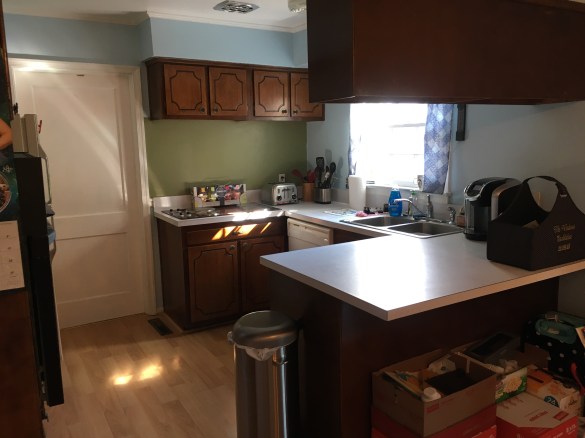
This is our kitchen. The only thing we did here was paint the walls – Originally, it was a much darker blue. We’ll eventually replace the hardware on the kitchen cabinets, and likely kick out the “peninsula” to make some more room. But other than paint, some Murphy’s Oil Soap, and new shelf paper in the cabinets and drawers, we didn’t change anything else.

I really like our vintage Westinghouse stovetop, and our oven is in the wall! It was a bit of a learning curve at first, but I really like it. I love that I can look out the window while at the sink.

img_0389

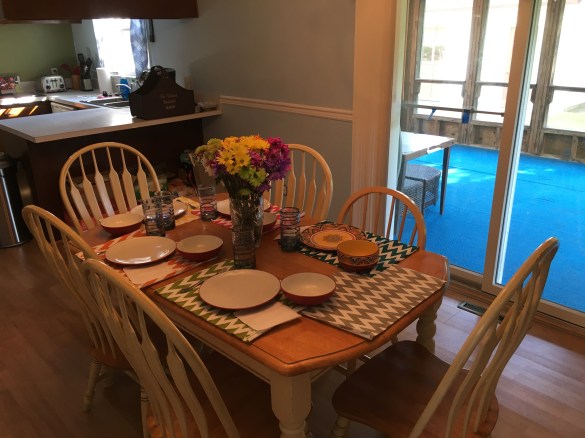
We received this awesome dining room set from church friends, whose son was moving out of an ODU apartment and didn’t need it. Many people have been incredibly generous, trying to find furniture for us. This was the table setting when we hosted Nick, Savy, and Mia last summer!

This photo also shows part of our screened-in porch. We can’t wait to do more with that down the road. For now, we have clothesline out there, and we want to put some patio furniture out there at some point!


We’ve already celebrated one Halloween and one Christmas in our house. I love these painted pumpkins! A local girl paints them. We bought a gorgeous pre-lit Christmas tree and had it in our living room. Excited to celebrate many more holidays!


All in all, I’m extremely grateful that we are in the place that we are. Once our ordeal was over in March 2016, everything started to fall into place. We’ve certainly had our challenges over the last year. Being homeowners, there are always things that happen! We’re gotten better with budgeting, improving with saving, and planning for the future. We know that our HVAC system is next on the list to be replaced, and then we’d like to get the windows replaced. We love our neighborhood, our house, and we can’t wait to make more memories together.

And don’t worry – More Before & After posts are coming soon!


Until the next headline, Laura Beth


Commentary #58: “The women who don’t know they’re autistic”

Autism Speaks

Image Credit: Autism Speaks

I stumbled upon this article via Facebook back in July. I thought it was fascinating, and it prompted me to learn more about autism.

Here’s the link to the original post:


The article primarily focuses on what’s known as “high-functioning” autism in women. This means autism without intellectual disability.

According to the American Association on Intellectual and Developmental Disabilities:

Intellectual disability is a disability characterized by significant limitations in both intellectual functioning and in adaptive behavior, which covers many everyday social and practical skills. This disability originates before the age of 18.


For years, it’s been studied, and widely publicized, that more boys than girls are diagnosed with autism.

Autism is defined as the following:

a mental condition, present from early childhood, characterized by difficulty in communicating and forming relationships with other people and in using language and abstract concepts.

It’s estimated that 1 out of 68 children in the United States are on the autism spectrum. For boys, it’s around 1 in 42.  For girls, it’s around 1 in 189.

Some of autism’s signs can now be recognized as early as 18 months of age, but are usually identified and diagnosed between the ages of two and three.

Parents are encouraged to seek evaluation of their child without delay. Early intervention can improve outcomes.

In 2013, all autism disorders were merged under one umbrella diagnosis of Autism Spectrum Disorder (ASD). Previously, they were distinct sub-types,  including autistic disorder, childhood disintegrative disorder, pervasive developmental disorder-not otherwise specified (PDD-NOS), and Asperger Syndrome.


Despite more childhood diagnoses, it’s becoming more common for people to be diagnosed as adults.

According to the Madison House Autism Foundation:

  • Those with autism may have exponentially acute senses. Bright or fluorescent lighting can be overwhelming. Loud sounds and crowds of people may be as well.
  • The ability to concentrate for long periods of time on one thing, and their attention to detail is something those without autism find enviable.
  • They are often highly visual people, and many have found ways to communicate through multiple mediums besides with words.
  • Those with autism may avoid eye contact with other people and, because they often take language literally, may have difficulty with metaphors, humor, and sarcasm. Interpreting what others are thinking or feeling is challenging because they have difficulty understanding social cues, such as tone of voice or facial expressions.
  • It is a myth that those with autism are unable to feel empathy.
  • Those with autism think, process, and behave differently than neurotypical individuals.

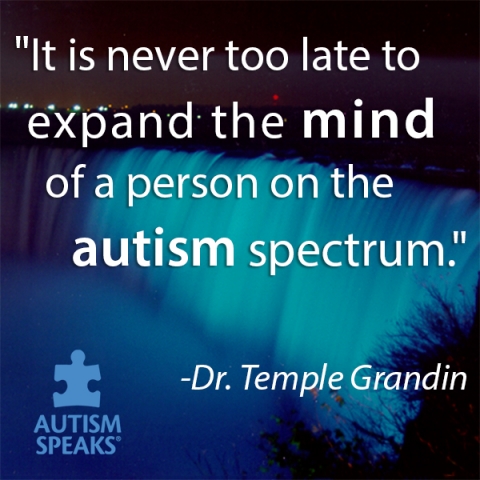
As renowned animal rights activist and professor Temple Grandin says, they are “Different, but not less.” They can, with support and slight modifications, become assets to every community and the workforce.

The main point I’m trying to get at – Individuals with autism are individuals. They are amazing. They may think and behave a little differently than others, but it’s important to recognize them and appreciate them.


The original article provided and cited a variety of sources:


This article shone a spotlight on women and how we can recognize smaller, less noticeable signs of ASD.

  • Compensating for communication impediments they may not be consciously aware of.
  • Not being good at guessing what people are thinking.
  • Hypersensitivities – Smells, sounds, bright lights, etc.
  • Reduced sensitivity to pain.
  • Misdiagnosed psychological disorders.
  • Taste for solitude.
  • Intensity of passions.
  • Talking about one subject / topic for extended periods of time, longer than normal (i.e., spending hours focusing on one thing in particular and not deviating).
  • Not wearing jewelry because of the way metal feels on the skin.
  • Not wearing certain clothing because of sensitivity to fabrics, tags, buttons, zippers, etc.

Given some of these signs and symptoms, it’s fairly easy to interpret or assume that a woman may be an introvert, be shy, have an undiagnosed anxiety disorder or obsessive-compulsive disorder (OCD), a speech impediment, or some form of a developmental or intellectual disability.

As the article indicates, ideally, a lot of women being diagnosed with autism as adults could have / should have been diagnosed as children. Luckily, these childhood diagnoses are improving every day. Leaps and bounds have been made in the last 20-30 years, and research is ongoing. However, doctors and psychologists alike need to remain vigilant, and keep a close eye on young girls exhibiting similar signs and symptoms, especially since autism symptoms in girls have appeared to be less obtrusive than those in boys.


For more information, here are some more links and resources. Education is so important. Continual learning and studying will help all of us better understand ASD, and start to take away the stigma!

I have immense respect for those who work in special education, work with individuals with ASD, and parents that have children with ASD. My hat goes off to all of you!


April is National Autism Awareness Month. The Autism Society encourages everyone to join them in promoting awareness, action, inclusion, acceptance, and appreciation.

World Autism Awareness Day is April 2nd of every year. It’s one of only four official health-specific United Nations (UN) days.

Several movies have been released, featuring prominent characters with autism or ASD behaviors. Children of the Stars is an award-winning documentary about children with autism in China.


What do you think? Do you know someone that is autistic?

Do you have any ideas about how to help those with ASD?


Until the next headline, Laura Beth 🙂

Writing Prompt #73: “52 Weeks of Gratitude Challenge” (Week 35)

Week #35: Your Neighborhood.

I took this picture last summer, right after we moved in.

In January, we were covered in snow!

What a gorgeous sunrise!

I love where we live! We definitely lucked out! One of the signatures is the crepe myrtle trees that line most of the streets. They’re absolutely beautiful.

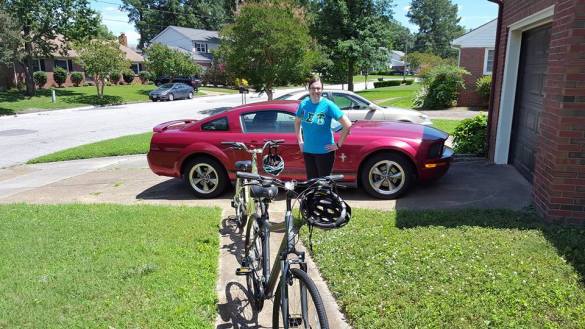
Bikes

Al took this photo a few months ago, right after we bought our bikes from SCAT Bikes, the local bike shop. We love riding around our neighborhood – Very safe and quiet. We certainly work up a good sweat! The only change we’ll make is better bike seats!

As this photo shows, our neighborhood allows us to safely ride bikes whenever we want. We have a nice mix of retired folks, younger couples like us, and a good number of kids. The school buses will start showing up next week!

It’s hard to believe we’ve been in our house for well over a year now!

I’m incredibly grateful that we found a house and a neighborhood that we could comfortably afford! I can see us raising our child / children here for many years.


Until the next headline, Laura Beth 🙂

Commentary #57: “Trump has no idea how much health insurance costs”

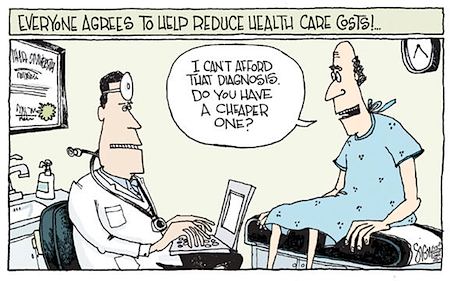
health-care-costs-2

Image Credit: thenesthome.net

Even though this article was published well over two months ago, it sparked a fire in me.

Here’s the link to the original post:


Reading this article, I was appalled. Granted, a lot of things about our current President are appalling. But, I digress.

How much do you pay every month, or every pay period, for your health insurance? (This is a rhetorical question, of course.)

I think we all WISH it was as little as $12 or $15.

Sadly, it’s not.


Al and I both are incredibly fortunate to have decent/good employer-sponsored health insurance. This means that health insurance is one of the benefits at the companies where we work. But, even though our employers offer it to us, it’s far from a simple process.

At my work, we can choose from several different options. Depending on what we pick, that factors into how much money we pay. For me, I’ve elected to pay for my plan out of every paycheck, and it’s automatically deducted.

Toward the end of the year, the two of us will sit down and re-evaluate the plans that both our companies offer, side-by-side. We will figure out if we will continue to pay for our own individual plans, like we have been, or if one of us will go on the other’s insurance plan since we’re now married. There are advantages and disadvantages to both of these strategies. So far, it’s worked out that we’ve paid for two individual plans. We will also have other decisions to make when we plan to grow our family. The short answer: Spouses and children are a tad bit expensive (to put it lightly).

I won’t say how much we pay, but it’s much more than $12 or $15 a month. That’s a pipe dream.


I thought this was an interesting link:

I don’t swear by these numbers, but it certainly gives me a good indication at how much prices have skyrocketed!

And, it’s a bit mind-boggling to think/know that every singe state in our country shows different prices.


Recently, I’ve seen multiple arguments / pleas / thoughts about the U.S. needing to convert to “universal health care” or go to a “single-payer system.”

So, what does this mean?

Canada, Australia, Taiwan, and several countries in Europe, offer their citizens “universal health care,” which basically means that health care is provided to everyone, no questions asked. Also, prices are typically lower / more affordable.

That conglomeration of ideas is certainly enticing to many. However, there are trade-offs.

For the most part, many citizens of these countries pay higher taxes.

Non-emergency approved surgery have significantly longer wait times. Sometimes, patients are waiting for at least six months for some surgeries, if not longer.

“Single-payer health care” is sometimes referred to as “Medicare for all.”

The way I interpret it, is that all citizens of a country pay into one pool. That pool of money is used exclusively for all health care costs. In this instance, health care is considered a right, not a privilege.

As some of the sources I’ve consulted point out, the U.S. already has an established single payer system, meaning Medicare and Medicaid. However, only certain people in the U.S. qualify for these programs, such as people over the age of 65, young children, the blind, and people with certain disabilities. Even so, there are strict rules in place. For example, not all states have expanded Medicaid – Virginia is one of those states. If you make too much money, you don’t qualify. And on and on. It’s immensely confusing, and frustrating.

Here’s a list of resources / articles that I found helpful:


In short, health care in the U.S. has become increasingly complicated, convoluted, and expensive. I realize that the Affordable Care Act (ACA) fixed some things, but it also created other problems. A lot of the big health insurance companies, along with the pharmaceutical companies, are purely driven by greed. They only care about the bottom line, not about the patients that are trying to get health care and medicine that they need.

I certainly don’t have the right answer.

In my research, I’m all for making health care more affordable. Every American should have equal access to health care at all times. But, making that happen is a tough challenge. In my view, if our country can revamp Medicare and Medicaid and make those existing programs into universal health care for America, that would be a step in the right direction.


Until the next headline, Laura Beth 🙂

Book Review #43: “Gunpowder and Tea Cakes: My Journey with Felicity”

Gunpowder and Tea Cakes

Image Credit: American Girl

If you haven’t already, I would recommend reading the two other Book Reviews I’ve written about Felicity’s books:


I think I loved this “Journey Book” more than all the ones I’ve read so far!

I know I’m biased because I live about 45 minutes away from Colonial Williamsburg. Regardless, I love how American Girl has portrayed Williamsburg in the present day, as well as the colonial period.

Our modern girl lives with her dad and grandmother, above her grandmother’s antiques shop. A miniature portrait on a chain catapults her back to 1775, and she meets Felicity and her friends. I loved how the author incorporated the current Williamsburg interpreters into the adventure!

Maybe it was just me (I haven’t counted all of them), but I feel like Felicity’s Journey Book has the most adventures that the reader can choose. It was really cool, but it was part of the reason why it took me longer to read it than the other two volumes.

There wasn’t really anything that I disliked about this book. If you’re looking for adventure, heart-stopping thrills, and an education on colonial times, this is an awesome book to check out!

This reader definitely wants to dive deeper into Colonial Williamsburg and its history. For me, I have no excuse!

5 out of 5 stars.


Until the next headline, Laura Beth 🙂

Book Review #42: “A Stand for Independence: A Felicity Classic 2”

A Stand for Independence

Image Credit: American Girl

If you haven’t already, I would recommend reading the review of the first Felicity volume before this one:


Volume 2 doesn’t quite pick up where Volume 1 leaves off, but that is easily forgiven. Like Love and Loyalty, Volume 2 covers the remaining three books of the original six-book series: Happy Birthday, Felicity!, Felicity Saves The Day, and Changes for Felicity.

Felicity turns ten years old early in the book, surrounded by family and friends. There are several surprises to be had – Grandfather gives her an amazing and precious gift, but warns her to be careful and be responsible with it. Mother is expecting a fourth child, and Penny the horse is due to be a mother as well! So much excitement!

Felicity learns an important lesson about responsibility as she outright disobeys Grandfather. She struggles with guilt and shame, but ultimately tells the truth. Will she be forgiven? Will the gift be taken back?

The second part of the book follows the Merrimans away from Williamsburg, and headed to Grandfather’s spectacular King’s Creek Plantation on the York River. I immediately recognized many of the names and places in the book. In my research, the plantation land has long been converted to a neighborhood full of houses and cottages, but the views of the York River are still breathtaking and beautiful. Seeing the modern photos (thank you, Internet), made me close my eyes and imagine what it looked like in 1775. The book helped immensely too – I saw Felicity, Nan, and William enjoying every one of their summer days, outside all day long! How carefree and wonderful.

The summer, however, is not without trouble. Mr. Merriman’s apprentice, Ben, becomes restless and impatient, and decides to run away. Luckily, Felicity comes to the rescue. The weaving of history is incredible. Ben struggles mightily with wanting to serve out his seven years as an apprentice to learn the trade, but the preparations for revolution grow stronger, almost every hour. At sixteen, Ben wants to join the fight. Will Felicity help him?

As summer fades to fall and winter, health issues plague members of Felicity’s family. Penny is due to give birth, but experiences complications, and an old enemy’s help is needed. Grandfather falls gravely ill, and the entire family pitches in to take care of him. The weather is just as violent, and the fight for independence grows stronger. Everyone spends the winter cooped up inside, trying to understand what’s happening in their family, as well as their colony.

Between the two books, I felt so much childhood nostalgia. I was propelled back to the early 1990s when I read and re-read the original six books, staring longingly at the beautiful illustrations. As I finished this book, I felt my excitement growing for Felicity’s newest book, Gunpowder and Tea Cakes. Review coming soon!

4 1/2 out of 5 stars.


Until the next headline, Laura Beth 🙂

Writing Prompt #72: “52 Weeks of Gratitude Challenge” (Week 34)

Week #34: Things You Like About Fall.

At this point, I think fall is my favorite season. The air turns cooler and more crisp. The changing colors of the leaves always takes my breath away. I have fond memories of raking my parents’ huge yard, and then jumping in the piles with the neighbors.

Halloween is one of my favorite holidays. Hopefully this year, Al and I can continue the tradition in our neighborhood that his parents started – Having a portable fire pit in the driveway and letting the kids (and adults) make s’mores, plus gather some candy. His parents’ house was the most popular spot in Jolliff Woods!

And this year, the fall of 2017 will be full of exciting adventures:

  • August-December: Taking Legal Writing (Fingers crossed this is my LAST paralegal class!).
  • September: Heading to Topgolf in Virginia Beach with Al, Beth, Casey, Rachel, and Will.
  • September: Celebrating our seven-year dating anniversary. How is that possible?!
  • September: Savy’s bachelorette weekend, aptly titled “Mimosas in the Mountains.”
  • September: Battle of the Sexes —This looks hilarious! Emma Stone and Steve Carell. I can’t wait!
  • October: Blade Runner 2049 — Ryan Gosling and Harrison Ford, yes, please!
  • October: Celebrating birthdays – My mom’s, Mia’s, and several other friends.
  • October: The Flash, season 4 premiere.
  • October: Nick and Savy’s wedding!
  • October: Hampton Comicon!
  • October: My Little comes home for a long-overdue visit!!
  • October: Stranger Things, season 2 premiere on Netflix, plus Halloween, plus Al’s epic Millennium Falcon model arrives!
  • November: Thor: Ragnarok — So excited!
  • November: Murder on the Orient Express — Daisy Ridley, Penelope Cruz, Johnny Depp, Judi Dench, Josh Gad, Leslie Odom, Jr., and Michelle Pfeiffer!!
  • November: Celebrating our two-year wedding anniversary!
  • November: Justice League!!!
  • November: Coco — Disney/Pixar!
  • November: Thanksgiving!
  • December: Star Wars: The Last Jedi.

There’s probably other things I’m missing, but those are the highlights!


8cb5def8e137704d87de60f1f4ad7876

I love this photo! It always makes me think of fall.


Are you excited for fall?


Until the next headline, Laura Beth 🙂


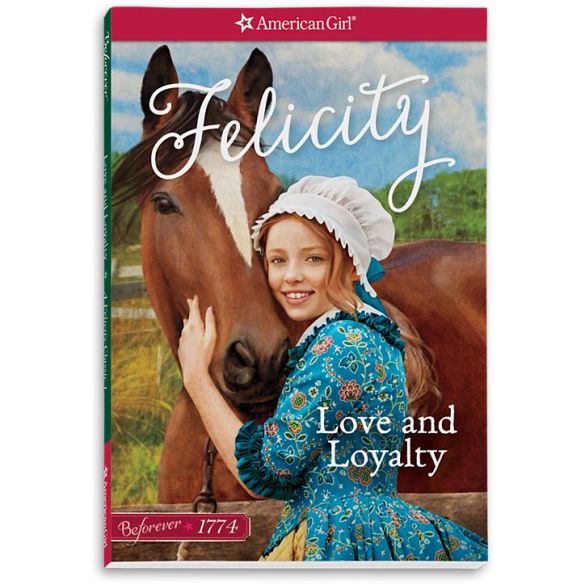
Book Review #41: “Love and Loyalty: A Felicity Classic 1”

Love and Loyalty

Image Credit: American Girl

I was a little apprehensive when I first learned that Felicity was being re-released under the BeForever line. She was originally archived in the spring of 2011. That’s quite a while!

However, I was pleasantly surprised when Al bought my Volume 1 and Volume 2 for my birthday earlier this month. Reading them has brought back so many childhood memories!

If you’ve read the original six-book “Central Series” before, you’ll notice that Volume 1 covers roughly the first three books. In this case, this includes Meet Felicity, Felicity Learns A Lesson, and Felicity’s Surprise.

I easily connected with Felicity’s character, mainly because her stories are set in Williamsburg, Virginia, during colonial times. Having grown up just a stone’s throw away from the historic city (About 45 minutes), Felicity was fairly popular among my friends in elementary school. When we celebrated Colonial Days, I saw many girls dressed in the period clothes that American Girl sold – I felt incredibly jealous!

The “new” Volume 1 opens in 1774. At nine years old, Felicity Merriman is the oldest child, with a younger sister and brother behind her. Her mother is the homemaker, while her father runs one of the most popular shops in the city. He imports many goods from Great Britain, and it quickly becomes evident that tensions are rising between the Loyalists and the Patriots.

Like the other American Girl books, the historical accuracy blew me away. I felt like I was on the streets of Williamsburg alongside Felicity, as she spends time with her family, makes deliveries for her father with his apprentice, Ben, and makes a new friend, Elizabeth. I could easily feel the heat between her Grandfather, a Loyalist, and Ben, a strong-headed Patriot. Felicity herself deals with complications, as Elizabeth and her family are from England, and are devoted to the king.

Rumors of revolution begin to develop, and the theme of freedom runs throughout. Felicity fights to free Penny the horse from her abusive master. Ben wants to be a member of the militia, but knows he’s obligated to Mr. Merriman for seven years of service. One character is jailed, and the families come together to attempt to set them free. The people of Williamsburg are upset with the oppressive taxes, and set out to begin to declare their independence.

As Christmas approaches, Felicity deals with love, loss, and hardship. She learns to be less impatient and more thoughtful. She begins to grow and blossom, and develops a greater appreciation for her family, and for the events surrounding her and her city. She deals with a lot of conflict, but in conflicting times, she perseveres.

Although I miss the beautiful illustrations from the old books, I greatly appreciated the attention to detail. I felt like I was in 1774, and it was hard to come back to 2017!

My review of Volume 2 is coming soon!

4 1/2 out of 5 stars.


Until the next headline, Laura Beth 🙂

Awesome Authors #6: Tim O’Brien

Tim OBrien - Quotefancy

Image Credit: Quotefancy

For some odd reason, I’ve been fascinated by the Vietnam War time period for many years. It started around middle school, when I read the Dear America and My Name is America books based in the late 1960s:

  • Where Have All the Flowers Gone? The Diary of Molly MacKenzie Flaherty, Boston, Massachusetts, 1968 (2002)
  • The Journal of Patrick Seamus Flaherty: United States Marine Corps Khe Sanh, Vietnam, 1968 (2002)

Both of those books were written by Ellen Emerson White. In high school, I read another of her books focusing on that time period, a young adult (YA) book called The Road Home (1995).

I also remember studying the Vietnam War in depth in my 20th Century History class as a senior in high school. In addition to history class, I gave a presentation on Woodstock for my Theory of Knowledge (ToK) class.

Maybe it’s because that was the time that my parents were in college and told me various stories over the years. No one in my family was involved in the combat or action, but I’ve read many books and done a lot of research about the war, and the U.S. involvement.


All that said, I can’t remember when I was first introduced to Tim O’Brien and his books. I think it was Dr. Lynch’s ENGL 150 class when I was a freshman in college. Regardless, as soon as I started reading, I was a fan.

Born in Austin, Minnesota, O’Brien had a younger brother and sister. At the age of ten, O’Brien’s family moved to Worthington, Minnesota. The move greatly influenced his writing, and he uses Lake Okabena in his book The Things They Carried (1990).

O’Brien earned a bachelor’s degree in political science in 1968. The same year, he was drafted into the Army and sent to Vietnam, serving there from 1969 to 1970. In 1968, the unit he was assigned was involved in the now-infamous My Lai Massacre.

After his tour in Vietnam, O’Brien started graduate school at Harvard University, and received an internship with The Washington Post. In 1973, he published his first work, his memoir of his experiences in Vietnam, titled If I Die in a Combat Zone, Box Me Up and Ship Me Home.

Since 1973, he’s published eight other works. His most recent publication was released in 2002.

In the present day, O’Brien lives and writes in central Texas. He’s married and has two sons. He teaches full-time every other year at Texas State University-San Marcos. When he’s not teaching full-time, he teaches workshops to MFA students in the creative writing program.

He has been recognized with several honors and awards. Most recently, he received the $100,000 Pritzker Military Library Literature Award, in June 2013.


Going After Cacciato (1978)

GoingAfterCacciato

Image Credit: Wikipedia

This is the book I remember reading at Longwood. It left such an impression on me for a long time. Cacciato is a member of Paul Berlin’s squad in Vietnam who goes absent without leave (AWOL), trying to get to France.

Critics and readers alike have marveled at O’Brien’s ability to blur reality and fiction, also known as verisimilitude. I think we read this in Dr. Lynch’s class, my very first semester in college, and the discussions we had were just incredible.

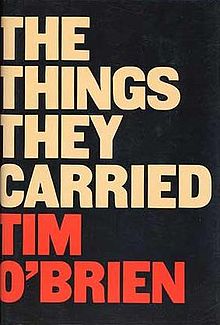
The Things They Carried (1990)

The_Things_They_Carried

Image Credit: Wikipedia

I didn’t read this collection of short stories for any class (I don’t think so, anyway), but writing this post has inspired me to put it on my TBR. This is where O’Brien use of verisimilitude shines.

In the Lake of the Woods (1994)

InTheLakeInTheWoods

Image Credit: Wikipedia

Inspired by O’Brien’s upbringing in Minnesota, this book combines drama, mystery, war, and politics. This is also going on my TBR!

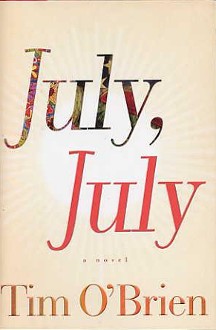
July, July (2002)

JulyJuly

Image Credit: Wikipedia

I don’t know what it is about class reunions, but whenever that particular topic is explored, I find myself intrigued. This novel is set in 2000, focusing on the delayed 30-year reunion of the class of 1969. This is also going on my TBR!


What about you? Have you read anything by Tim O’Brien?

Come back next month for another installment of Awesome Authors!


Until the next headline, Laura Beth 🙂

Commentary #56: “Changing Telling into Showing”

ML Keller

Image Credit: M.L. Keller

As an aspiring novelist, I subscribe to several WordPress blogs that are dedicated to advice about writing.

Back in July, one blogger re-blogged a post from Michelle Keller, also known as ML Keller – The Manuscript Shredder!

Here’s the link to the original post:


This is something that I have ALWAYS struggled with in my writing. In college, I was told this several times, both in writing and to my face. It stung, but, it’s true.

I majored in Communication Studies, with a Mass Media concentration. But, I also minored in Rhetoric & Professional Writing, through the English department. I always wanted to take creative writing classes, and at Longwood, I got that chance!

But, combining that major and minor affected my writing in an interesting way. Through being a writer, and eventually an editor, for The Rotunda student newspaper, I learned quickly how to summarize my points and quotes for an article, or a column, or a feature. For the newspaper, I knew I couldn’t write a novel.

However, summarizing for countless articles and columns bled into my creative writing. One of my professors, Dr. Steven Faulkner, told me in a one-on-one meeting that he could tell immediately that I was a journalism student. He looked me in the eyes, and said, “You’ve mastered the art of summary.” I still remember him saying that – It’s been eight years now. I was taking his Advanced Creative Non-Fiction class at the time, and I was frustrated that I wasn’t improving my overall grade. I ended up with a good grade, but that conversation has always stuck with me.


In her post, Keller says that changing telling into showing is “hated.” Why?

  • Telling stops your story cold.
  • Telling creates distance from your characters.
  • Telling is boring to read.

Ir’s harsh advice, but I know that I needed to read it.

One of the biggest pieces that stuck out to me was:

“Imagine meeting someone for the first time over coffee and the entire conversation is her talking about people you have never met and her deepest darkest life experiences? You’d probably think she needs some serious counseling, but so many of the manuscripts I see begin this way.”

I’ve definitely filed that away for future reference.

In order to change telling into showing, Keller gives several pieces of good advice.

  • Have your characters argue.
  • Have your characters interact with the setting.
  • Use transitions.

According to Keller, the easiest way to change telling into showing is something that I’ve appreciated as a reader for a long time:

Treat your novel like a movie. If the reader can’t see it on the screen, (in novels the other senses count too) then you are telling.

I first noticed this several years ago, when, oddly enough, I started reading and re-reading the Nicholas Sparks novels. There were times (a lot of them with him in particular) where I would put the book down for a minute, and I felt like I could see the action on the page I was just reading play out in front of me, just like a movie.

Once I realized this, I started looking for it in other books, and with other authors. It became a litmus test for me, in a way. The more scenes I could see or visualize, the more I liked the book.

I definitely want to be able to do this in my own novels. I want my readers to use all of their senses when reading my books.


Until the next headline, Laura Beth 🙂